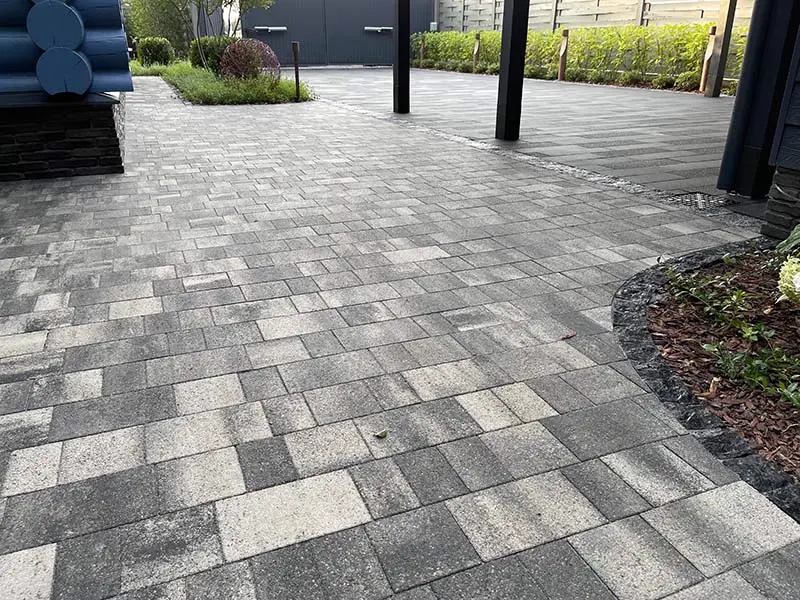
When you’re investing thousands of dollars in a new interlock driveway or interlock patio, you’ll hear contractors talk endlessly about “the base.” But what does that actually mean? And more importantly, why should you care?
Let’s cut through the sales jargon and explain exactly what goes into a proper interlock base, why it matters in Ottawa’s challenging climate, and what questions you should be asking before signing any contract.
Understanding the Anatomy of an Interlock Base
An interlock installation isn’t just pretty stones laid on dirt. It’s a carefully engineered system that needs to withstand freeze-thaw cycles, heavy loads, and decades of use. The base is the foundation of this system, and it typically consists of three distinct layers.
The Excavation: Going Deep Enough
Before any materials go in, the existing soil must be excavated. In Ottawa, a proper excavation for a driveway should be between 16 to 20 inches deep, while patios typically require 12 to 16 inches. This isn’t arbitrary—these depths are calculated based on frost penetration levels, expected vehicle loads, and soil conditions.
The excavation must also extend beyond the finished surface area by at least 6 inches on all sides. This extra space allows for edge restraints and ensures the entire paved area has proper support underneath. Skipping this step is one of the most common shortcuts that leads to sunken interlock pavers down the road.
Layer One: Granular A Base (The Heavy Lifter)
The first material that goes into your excavation is Granular A (also called Granular A gravel or OPSS Granular A). This is a specific blend of crushed stone ranging from fine particles up to 2 inches in diameter. It’s not just any gravel—it’s engineered aggregate that meets Ontario Provincial Standard Specifications.
For driveways, you typically need 8 to 12 inches of compacted Granular A. For patios and walkways, 6 to 8 inches is usually sufficient. The key word here is “compacted.” Loose Granular A means nothing. It must be installed in lifts (layers) of no more than 4 inches at a time, with each lift thoroughly compacted using a plate tamper or roller.
Proper compaction is critical. When Granular A is correctly compacted, it creates an incredibly stable platform that can handle enormous loads while still allowing water to drain through. This drainage capability is especially important in Ottawa where spring thaw can turn poorly drained bases into mud pits.
Layer Two: HPB Screenings (The Leveling Bed)
On top of the Granular A goes a 1-inch layer of HPB screenings (High Performance Bedding). This is a much finer material—essentially stone dust with small angular particles that lock together when compacted.
The screenings serve two purposes. First, they create a perfectly smooth, level surface for laying the pavers. Second, they allow for minor adjustments during installation while still providing a stable bed. The pavers are laid directly onto the screenings and then compacted into them.
Some contractors cut corners by using sand instead of screenings. While sand is cheaper, it doesn’t lock together as well, can shift over time, and is more prone to washout during heavy rains. HPB screenings are the professional standard for good reason.
Why Base Depth Matters in Ottawa’s Climate
You might be wondering: do we really need 16+ inches of base material? Can’t we get away with less?
The short answer is no—not if you want your interlock to last. Ottawa’s climate presents unique challenges that make a proper base non-negotiable.
The Frost Line Factor
Ottawa’s frost line—the depth to which the ground freezes in winter—extends down approximately 48 inches (4 feet). When water in the soil freezes, it expands, causing the ground to heave upward. When it thaws in spring, the ground settles back down.
This freeze-thaw cycle happens repeatedly throughout our winter and shoulder seasons. Without a proper base extending well below the surface, your pavers will rise and fall with these cycles, leading to cracking, separation, and uneven surfaces.
A deep, well-compacted Granular A base creates a buffer zone between the pavers and the frost-susceptible soil below. The angular stone particles lock together and resist movement, while the air gaps allow moisture to drain away rather than pooling and freezing.
Load Distribution
Whether it’s a delivery truck on your driveway or heavy furniture on your patio, loads need to be distributed across a wide area to prevent localized sinking. A thick base spreads these loads over a larger footprint, reducing pressure on any single point.
Think of it like wearing snowshoes. The same weight is distributed over a larger area, preventing you from sinking into the snow. Your interlock base works the same way, spreading vehicle and foot traffic loads over a broad, stable foundation.
Long-Term Stability
A proper base isn’t just about surviving the first winter—it’s about maintaining structural integrity for 25+ years. The depth and quality of your base directly correlate to longevity. Installations with inadequate bases often show problems within 3-5 years, while properly built installations remain level and stable for decades.
Signs of Inadequate Base Preparation
How can you tell if a contractor is cutting corners on the base? Here are the red flags to watch for.
During Installation
If you’re watching the installation process, look for these warning signs:
- Shallow excavation: If they’re not going down at least 12-16 inches, something’s wrong
- Skipping compaction: Each layer should be compacted with heavy equipment—not just raked smooth
- Using sand as bedding: Professional installations use HPB screenings, not playground sand
- Installing Granular A in one thick layer: It must be done in multiple lifts, never all at once
- Wet, muddy base conditions: Installing on saturated ground is a recipe for future settling
- No edge restraints: Proper installations include concrete edge restraints or spikes to prevent lateral movement
After Installation
Even if you didn’t see the installation, certain post-installation issues point to base problems:
- Quick settling: If pavers sink or become uneven within the first year, the base wasn’t properly compacted
- Puddles that won’t drain: Indicates improper grading or inadequate drainage through the base
- Pavers shifting or separating: Often means insufficient or poorly compacted screenings
- Lippage (pavers sticking up at edges): Can indicate uneven base compaction
- Frost heaving in winter: Clear sign that the base doesn’t extend deep enough below the frost line
If you’re already experiencing these issues, you may need professional interlock repair to address the underlying base problems.
What to Ask Your Contractor About Their Base Process
Don’t be afraid to ask detailed questions. A reputable contractor will be happy to explain their process. Here are the questions that separate professionals from corner-cutters.
Specific Questions to Ask
“What is your total excavation depth for this project?”
For driveways, you want to hear 16-20 inches. For patios, 12-16 inches. If they say less, ask why.
“How many inches of Granular A will you install, and in how many lifts?”
The answer should be 8-12 inches for driveways (6-8 for patios), installed in 4-inch lifts with compaction between each.
“What type of compaction equipment will you use?”
Look for mentions of plate tampers or vibratory rollers. Hand tamping is insufficient for most projects.
“Will you use sand or HPB screenings for the bedding layer?”
The correct answer is HPB screenings. If they say sand, that’s a red flag.
“How will you handle drainage?”
They should discuss slope direction, possible use of weeping tile around perimeters, and how water will drain through and away from the base.
“What type of edge restraints will you install?”
Concrete edge restraints or heavy-duty spikes are standard. Plastic edging alone is often insufficient for driveways.
“Is the base work included in your written quote?”
Get everything in writing. The quote should specify excavation depth, types of materials, and compaction methods.
Questions About Their Experience
“How do you account for Ottawa’s frost line in your base design?”
They should demonstrate knowledge of local climate considerations and frost penetration depths.
“Can you provide references from projects completed 5+ years ago?”
Long-term performance is the best indicator of proper base work. Ask if you can see or speak with past clients about how their interlock has held up.
“What warranty do you offer on the base work?”
Reputable contractors stand behind their work. A warranty on settling or heaving demonstrates confidence in their base preparation.
The Real Cost of Cutting Corners
You might get quotes from contractors with significantly different prices. Often, the difference comes down to base preparation. A contractor offering a price that seems too good to be true might be planning to:
- Excavate less deeply (using less material and labor)
- Skip proper compaction (saving time and equipment costs)
- Use inferior materials (sand instead of screenings, lower grade aggregate)
- Install fewer or no edge restraints
These shortcuts might save you $2,000-$4,000 upfront, but they’ll cost you far more when you need to tear everything out and start over in 5-7 years. And when you factor in the full cost of interlock installation in Ottawa, it becomes clear that investing in proper base work from the start is the economical choice.
A properly built interlock installation should last 25-30 years with minimal maintenance. An installation with a substandard base might need major repairs or complete replacement within a decade. The math is simple: pay for quality once, or pay for mediocrity twice.
Final Thoughts: The Base Is Everything
When you strip away the marketing and sales talk, interlock installation comes down to one fundamental truth: the base is everything. You can have the most beautiful pavers, the most intricate patterns, and the most skilled installation crew, but if the base isn’t right, none of it matters.
In Ottawa’s climate, with our extreme freeze-thaw cycles, heavy snowfall, and temperature swings from -30°C to +30°C, there’s simply no substitute for doing the base work properly. The pavers you can see are only as good as the layers you can’t see.
When interviewing contractors, pay attention not just to their portfolio of pretty pictures, but to their willingness to discuss the technical details of excavation, materials, and compaction. The contractor who can explain exactly what’s going into the ground—and why—is the one who deserves your business.
Ready to Build on Solid Ground?
At Interlock Experts, we never cut corners on base preparation. Every installation begins with proper excavation, premium materials, and meticulous compaction—because we know that’s what it takes for interlock to perform in our climate.
Whether you’re planning a new interlock driveway, expanding your outdoor living space with an interlock patio, or need to address existing problems with professional repair work, we’d love to discuss your project.
Contact us today for a free consultation. We’ll visit your property, assess your specific site conditions, and provide a detailed quote that breaks down exactly what goes into the ground—because you deserve to know what you’re paying for.
Let’s build something that lasts.