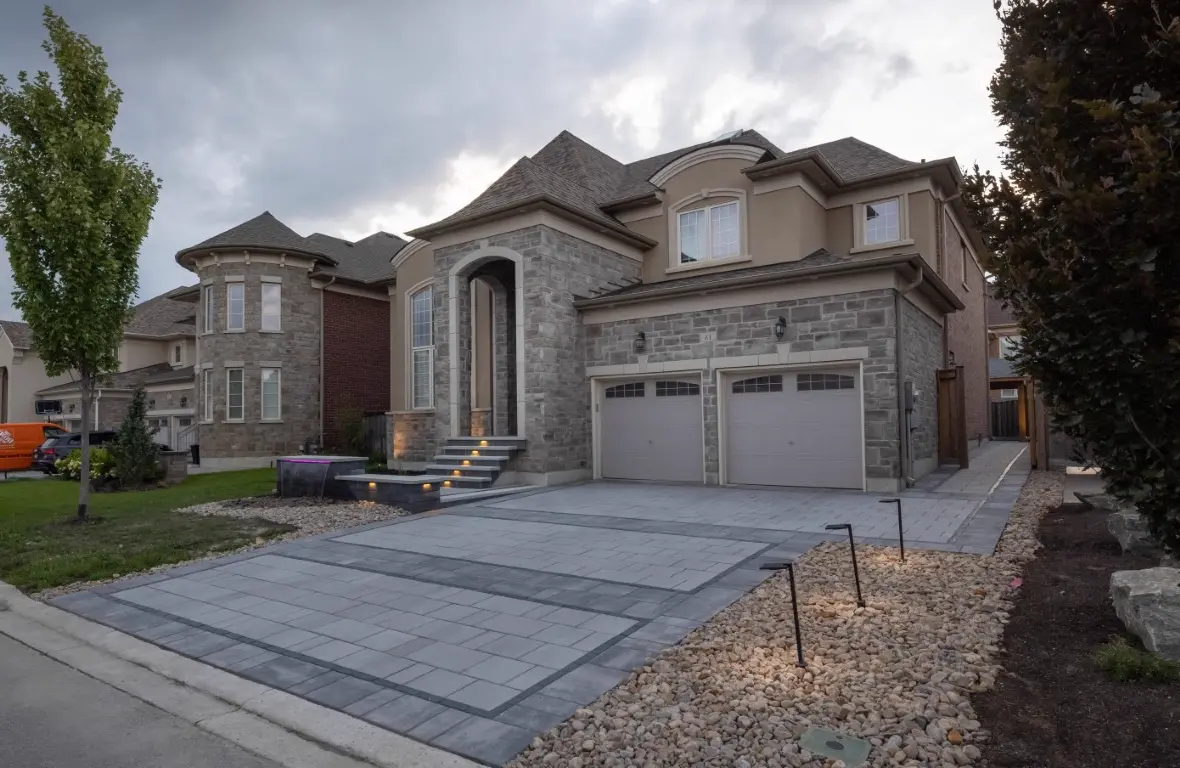
If you’re considering a new interlock driveway or patio in Ottawa, you’ve likely heard about permeable pavers as an eco-friendly alternative to traditional interlocking stone. But are permeable pavers worth the investment for Ottawa homeowners? In this comprehensive guide, we’ll explore what permeable interlock is, how it works, its benefits and drawbacks, and whether it makes sense for Ottawa’s unique climate and soil conditions.
What Are Permeable Pavers?
Permeable pavers, also called pervious or porous pavers, are a type of interlocking stone designed to allow water to pass through the surface and infiltrate into the ground below. Unlike traditional interlock installations where pavers are tightly fitted together with fine jointing sand, permeable systems feature wider joints filled with coarse aggregate that creates channels for water drainage.
There are three main types of permeable paving systems:
1. Permeable Interlocking Concrete Pavers (PICP)
These look similar to standard concrete pavers but have wider joints (typically 8-10mm) filled with small, angular stone. The pavers themselves are non-porous, but water flows through the joints between them. This is the most common type used in residential applications in Ottawa.
2. Porous Pavers
These pavers are made with pervious concrete that allows water to pass directly through the paver material itself. They’re less common in residential settings and more often used in commercial applications or parking lots.
3. Grid Systems
Plastic or concrete grid structures filled with gravel or planted with grass. These are typically used for overflow parking areas or fire access lanes rather than main driveways or patios.
For most Ottawa homeowners, permeable interlocking concrete pavers (PICP) offer the best balance of aesthetics, functionality, and cost.
How Do Permeable Pavers Work?
A permeable paver system is much more than just the surface pavers you see. It’s a multi-layer system designed to manage stormwater:
Layer 1: Pavers – The visible surface with wide joints filled with permeable jointing stone (typically 3-6mm clean, angular aggregate).
Layer 2: Bedding Layer – A 50mm layer of 6-9mm clean, crushed stone that allows water to pass through while providing a stable base for the pavers.
Layer 3: Reservoir Base – A substantial layer (typically 300-600mm depending on soil type and drainage requirements) of 20-40mm clear crushed stone. This layer temporarily stores water before it infiltrates into the subgrade below.
Layer 4: Geotextile Fabric – Placed between the reservoir base and native soil to prevent soil migration while allowing water infiltration.
Layer 5: Native Soil – The existing ground, which must have adequate permeability for the system to function properly.
When it rains, water flows through the joints, through the bedding layer, and into the reservoir base where it’s temporarily stored before gradually infiltrating into the ground. In heavy rainfall events, the reservoir base can hold significant amounts of water, reducing runoff and preventing pooling on the surface.
Benefits of Permeable Interlock in Ottawa
Superior Drainage and Water Management
Ottawa experiences its fair share of intense rainfall, especially during summer thunderstorms. Traditional interlock can develop standing water issues if not properly graded. Permeable pavers eliminate this problem by allowing water to drain directly through the surface. You’ll never have puddles on your driveway or patio, even during heavy downpours.
Environmental Benefits
Permeable paving systems offer several environmental advantages that are increasingly important to Ottawa homeowners:
Reduced Stormwater Runoff: By allowing water to infiltrate naturally, permeable pavers reduce the burden on Ottawa’s stormwater management system. This is particularly important as the city continues to grow and impervious surfaces increase.
Groundwater Recharge: Water that infiltrates through your driveway or patio helps recharge local groundwater supplies rather than running off into storm sewers and eventually the Ottawa River.
Natural Filtration: As water passes through the aggregate layers, pollutants like oils, heavy metals, and sediments are naturally filtered out before reaching groundwater.
Reduced Heat Island Effect: Permeable surfaces stay cooler than traditional pavement because water evaporates from within the system, reducing surface temperatures during hot Ottawa summers.
Municipal Incentives and Regulations
Some municipalities in the Ottawa area are beginning to offer incentives for permeable paving installations as part of stormwater management initiatives. Additionally, if you’re increasing the impervious surface area on your property significantly, permeable pavers may help you meet lot coverage requirements or avoid stormwater management fees.
Less Ice Formation
Because water drains through the surface rather than pooling, permeable pavers tend to have less ice formation than traditional interlock in Ottawa’s freeze-thaw cycles. Water that would normally sit on the surface and freeze instead drains away, creating safer walking and driving surfaces.
Drawbacks and Challenges in Ottawa
Higher Initial Cost
Permeable paver systems typically cost 15-30% more than traditional interlock installations. The higher cost comes from several factors:
- Deeper excavation (often 300-600mm vs. 200-300mm for standard interlock)
- More aggregate materials for the reservoir base
- Specialized permeable jointing stone
- Additional labor for proper installation
- Potential need for geotextile fabrics and drainage pipes
For pricing specifics, we recommend getting a detailed quote that accounts for your site’s soil conditions and drainage requirements.
Maintenance Requirements
While permeable pavers don’t require excessive maintenance, they do need more attention than traditional interlock to maintain their permeability:
Regular Vacuuming: The joints need to be vacuum-cleaned 1-2 times per year to remove sediment and debris that can clog the system. This requires specialized equipment or professional service.
Joint Aggregate Replenishment: Over time, jointing aggregate can be displaced by heavy use, freeze-thaw cycles, or snowplowing. You’ll need to top up joints periodically to maintain proper infiltration.
Weed Prevention: The wider joints can allow weed growth if not maintained. Regular cleaning and the use of polymeric jointing sand alternatives designed for permeable systems can help.
Winter Maintenance Challenges: Snow plowing must be done carefully to avoid displacing jointing aggregate. Some Ottawa homeowners find they need to adjust their snow removal practices.
Ottawa Winter Performance Concerns
Ottawa’s harsh winters present unique challenges for permeable paving systems:
Freeze-Thaw Cycles: Our frequent freeze-thaw cycles can cause heaving if the base isn’t properly designed and installed with adequate drainage.
Salt and Sand: Road salt and sand used in winter can clog the system over time. While spring cleaning can address this, it’s an ongoing maintenance consideration.
Rapid Freezing: If water in the reservoir base freezes before it can infiltrate (common with our quick temperature drops), it can temporarily reduce the system’s effectiveness until spring thaw.
Soil Limitations
Permeable pavers work best when the native soil has good permeability. Ottawa’s soil composition varies significantly across the city:
Clay Soils: Many areas of Ottawa, particularly in older neighborhoods, have heavy clay soils that don’t drain well. If your property has clay soil, you may need underdrains to carry water away rather than relying solely on infiltration, adding to the cost and complexity.
High Water Table: Properties near the Ottawa River or other water bodies may have high seasonal water tables that prevent proper infiltration.
Rock: Some areas have shallow bedrock that limits excavation depth and infiltration capacity.
A soil permeability test should be conducted before committing to a permeable paver system to ensure your property is suitable.
Is Permeable Interlock Right for Your Ottawa Property?
Permeable pavers make the most sense for Ottawa homeowners when:
- Your property has sandy or loamy soil with good natural drainage
- You’re concerned about drainage issues or want to eliminate standing water
- Environmental sustainability is a priority for your project
- You’re willing to invest in periodic maintenance
- Your municipality offers incentives or requires stormwater management measures
- You’re installing a new driveway or large patio and want to minimize runoff
Permeable pavers may not be the best choice if:
- Your property has heavy clay soil without space for underdrains
- Budget is your primary concern and traditional interlock costs significantly less
- You’re unable or unwilling to perform regular maintenance
- Your site has a high water table or very shallow bedrock
- You need immediate cost savings over long-term environmental benefits
Ottawa-Specific Considerations
Municipal Requirements
Before installing permeable pavers in Ottawa, check with your municipality about:
- Building permits (typically required for driveways over a certain size)
- Setback requirements from property lines and municipal infrastructure
- Stormwater management regulations, especially for new construction or significant renovations
- Potential rebates or incentives for sustainable drainage solutions
Local Climate Factors
Ottawa’s climate demands special attention to:
Frost Depth: The base must extend below Ottawa’s frost line (typically 1.2-1.5m) to prevent heaving, though the permeable reservoir can be part of this depth.
Spring Runoff: Our heavy spring melt can test any drainage system. Properly designed permeable paver installations handle this exceptionally well.
Summer Storms: Ottawa’s intense summer thunderstorms can overwhelm poorly designed drainage. Permeable systems excel in these conditions.
Making Your Decision
Permeable interlock represents a significant advancement in sustainable hardscaping, but it’s not the right solution for every Ottawa property. The ideal candidate is a homeowner who values environmental stewardship, has suitable soil conditions, and is willing to invest in both the higher upfront cost and ongoing maintenance.
If drainage is your primary concern but soil conditions aren’t ideal for permeable pavers, traditional interlock with proper grading and drainage solutions may be a more cost-effective choice.
For properties with good soil drainage, environmentally conscious owners, or sites where stormwater management is required, permeable interlock offers an excellent combination of functionality, aesthetics, and environmental benefits that can justify the additional investment.
Ready to Explore Permeable Paving for Your Ottawa Property?
At Interlock Experts, we have extensive experience installing both traditional and permeable interlocking stone systems throughout the Ottawa region. We can assess your property’s soil conditions, discuss your drainage goals, and provide honest recommendations about whether permeable pavers are the right choice for your project.
Our team will conduct a thorough site evaluation, including soil permeability testing if needed, and provide a detailed quote that outlines all costs associated with a permeable paver installation. We’ll also explain the maintenance requirements so you can make an informed decision.
Contact Interlock Experts today for a free consultation and quote. Whether you choose permeable or traditional interlock for your driveway, patio, or walkway, we’ll ensure your project is built to last through Ottawa’s challenging climate while meeting your aesthetic and functional goals.