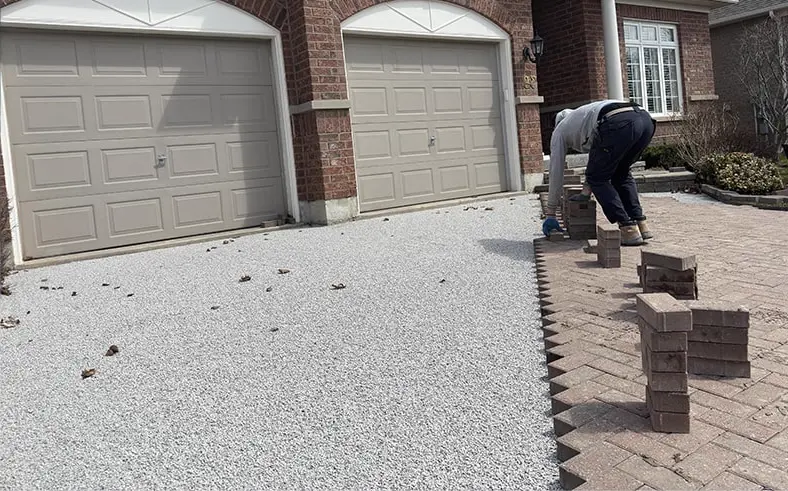
Spring arrives in Ottawa, the snow melts, and you walk out to discover your beautiful interlock driveway or patio isn’t quite as solid as it was last fall. Loose pavers, rocking stones, and gaps in the joints are common sights after Ottawa’s brutal freeze-thaw cycles. The question every homeowner faces: is this something you can fix yourself with a quick patch, or do you need professional repair?
This guide breaks down exactly why pavers loosen after winter, which fixes are temporary band-aids versus permanent solutions, and how to tell what your specific situation needs.
Why Pavers Loosen After Winter in Ottawa
Ottawa experiences some of the most challenging conditions for interlock installations in North America. Our winters aren’t just cold—they’re volatile, with temperature swings that create havoc beneath your pavers.
1. Frost Heave
When ground moisture freezes, it expands. This upward pressure literally lifts pavers out of position. Ottawa’s frost line reaches 4-6 feet deep, and any moisture trapped in inadequate base material will freeze and expand. Come spring thaw, pavers settle back down—but rarely in their original positions.
2. Polymeric Sand Washout
The sand between your pavers does more than fill gaps—it locks pavers together. Winter melt, spring rain, and ice dam runoff can wash out polymeric sand, especially if it wasn’t properly activated or has reached the end of its 5-7 year lifespan. Without this lateral support, pavers rock and shift.
3. Edge Restraint Failure
Edge restraints (plastic paver edging or concrete curbs) hold your installation together. Frost heave can shift these restraints, freeze-thaw can crack them, and ground movement can pull them loose. Once the edges fail, the entire installation begins spreading outward.
4. Base Movement
A properly installed interlock base includes 6-8 inches of compacted granular A and B. If this base wasn’t adequately compacted, lacks proper drainage, or was installed over unstable soil, winter freeze-thaw cycles cause settling, shifting, and void creation beneath pavers.
Quick Fixes (Temporary Solutions)
These solutions address symptoms, not causes. They’ll buy you time, but won’t prevent the problem from returning next winter.
1. Add Polymeric Sand to Joints ($50-$150 DIY)
What it does: Fills gaps between pavers, provides lateral support, reduces movement.
How to do it:
- Sweep area clean and dry
- Pour polymeric sand over pavers, sweep into joints
- Use plate compactor or hand tamper to vibrate sand deep into joints
- Sweep excess off surface
- Mist with water to activate (follow manufacturer’s instructions carefully)
When it works: Isolated loose pavers where sand has washed out but base is still solid.
When it doesn’t: Base movement, edge restraint failure, or multiple pavers affected across large area.
2. Tap Pavers Back Into Place (Free)
What it does: Physically repositions raised or shifted pavers to be level with surrounding area.
How to do it:
- Use rubber mallet (never metal hammer) to tap paver down
- Place wood block on paver to distribute force evenly
- Tap gently from multiple angles
When it works: Single paver lifted by isolated frost heave, no visible base damage.
When it doesn’t: The paver will simply lift again next winter because the underlying cause (poor drainage, inadequate base) hasn’t been addressed.
3. Compact With Rubber Mallet (Free)
What it does: Reseats slightly raised pavers by compacting bedding sand beneath them.
How to do it:
- Walk across affected area
- Note pavers that rock or feel loose
- Tap each one firmly with rubber mallet
- Recheck for rocking
When it works: Minor settling where bedding sand has loosened but base is intact.
When it doesn’t: Voids beneath pavers, base erosion, or edge spreading.
Proper Repairs (Permanent Solutions)
These repairs address the root cause and prevent recurrence. They cost more upfront but save money versus repeated temporary fixes.
1. Lift, Recompact Base, Relay ($10-$18/sq ft)
What it fixes: Base settlement, erosion, inadequate compaction, poor drainage.
Process:
- Remove affected pavers (numbered for reinstallation in same pattern)
- Remove bedding sand to expose base
- Assess base condition—add material if settled, improve drainage if waterlogged
- Recompact base in lifts with plate compactor
- Add fresh bedding sand (1 inch)
- Relay pavers in original pattern
- Apply polymeric sand
Cost factors: Area size, base damage extent, drainage improvements needed, access for equipment.
When you need it: Multiple loose pavers, visible base settling, annual recurrence of same problem.
Learn more about this process on our interlock repair page.
2. Replace Edge Restraints ($200-$500)
What it fixes: Outward spreading of pavers, edge deterioration, lateral movement.
Process:
- Remove outer pavers along affected edge
- Install heavy-duty plastic paver edging secured with 10-inch spikes every 12 inches
- Or pour concrete edge restraint (more permanent but higher cost)
- Relay edge pavers snug against new restraint
- Fill joints with polymeric sand
When you need it: Gaps appearing between pavers and lawn/concrete, pavers spreading outward, old restraint visible or broken.
3. Install Drainage ($500-$2,000)
What it fixes: Water infiltration into base, frost heave, ice buildup, persistent settling.
Solutions:
- French drain: Perforated pipe along edge of installation captures runoff before it reaches base
- Channel drain: Surface drainage for heavy water flow areas (bottom of slopes)
- Regrade: Adjust slope to direct water away from installation
- Extend downspouts: Redirect roof runoff away from paver area
When you need it: Standing water after rain, ice buildup in winter, visible water staining on pavers, moss/algae growth.
How to Tell Which Repair You Need
Walk your installation with these diagnostic questions:
Single Loose Paver vs. Area of Movement
- One or two pavers: Likely just sand washout. Try polymeric sand refill first.
- Section of pavers (10+ stones): Base or edge issue. Need professional assessment.
- Entire driveway/patio: Systemic problem—poor installation or drainage. Full lift and relay likely needed.
Base Visible vs. Intact
- Can’t see base material: Pavers and sand layer intact. May just need sand refill.
- Base gravel visible through joints: Bedding sand eroded. Need to lift, add sand, relay.
- Voids or gaps under pavers: Base failure. Full repair required.
Test for Rocking
Step on each paver corner. Does it rock like a seesaw? This indicates:
- Void beneath paver (base erosion)
- Bedding sand washed out
- Paver corners raised by frost
One or two rocking pavers: likely quick fix. Entire area rocking: professional repair needed.
Look for Sand Loss
Joints should be full of sand to within 1/8 inch of paver surface. If you can see more than 1/4 inch down into joints, or joints are completely empty, polymeric sand has failed and needs replacement.
Spring Inspection Checklist for Ottawa Homeowners
After the last frost (typically mid-April in Ottawa), walk your installation and check:
- Edges: Are pavers flush with restraint or spreading outward?
- High spots: Any pavers noticeably higher than neighbors?
- Low spots: Areas where water pools after rain?
- Joints: Polymeric sand intact or washed out?
- Rocking: Test pavers by stepping on corners—do they move?
- Cracks: Any pavers cracked (separate issue—needs replacement)?
- Staining: Water stains, efflorescence, or moss (drainage issue)?
Document issues with photos and measurements. This helps contractors provide accurate quotes if professional repair is needed.
Ottawa’s Freeze-Thaw Impact: Why Good Installations Still Fail
Ottawa experiences an average of 50-60 freeze-thaw cycles per winter—among the highest in Canada. Each cycle expands and contracts the ground beneath your pavers.
Even professionally installed interlocking with proper base and drainage will experience some movement over time. The difference is how much:
- Poor installation: Noticeable settling/lifting every spring, requires repair within 3-5 years
- Good installation: Minor sand loss over 5-7 years, polymeric sand refresh needed
- Excellent installation: Minimal movement for 10-15 years, occasional joint filling only
If your installation is less than 5 years old and experiencing major movement, the installation itself was likely substandard.
Polymeric Sand Reapplication: When and How to Do It Right
Polymeric sand should last 5-7 years in Ottawa’s climate with proper installation. Signs you need reapplication:
- Joints more than 1/4 inch empty
- Sand crumbling or breaking apart
- Weeds growing in joints (polymeric sand prevents this when intact)
- Ants bringing regular sand to surface (they can’t penetrate activated polymeric sand)
DIY Polymeric Sand Application
Materials needed:
- Polymeric sand (calculate 1 bag per 100 sq ft for typical joints)
- Broom
- Leaf blower
- Garden hose with mist nozzle
- Plate compactor (rent from Home Depot, $60/day)
Process:
- Ensure area is completely dry (wait 24 hours after rain)
- Remove old sand from joints with pressure washer or scraping tool
- Let dry completely (24-48 hours)
- Pour polymeric sand, sweep into joints from multiple directions
- Vibrate with plate compactor to settle sand deep into joints
- Add more sand, repeat until joints full to within 1/8 inch of surface
- Sweep ALL excess sand off surface (critical—any sand left behind will haze)
- Mist with water according to manufacturer instructions (usually light mist, then wait, then heavier mist)
- Keep off surface for 24 hours minimum
Common mistakes:
- Applying when joints are damp (won’t bond properly)
- Not sweeping off excess (creates white haze on pavers)
- Over-watering during activation (washes binders out of joints)
- Applying in wrong weather (needs 24 hours rain-free after application)
Professional polymeric sand installation costs $3-$5 per square foot and includes warranty. Learn more on our polymeric sand installation page.
When to Call a Professional
Some situations require professional assessment and repair:
Multiple Loose Pavers
If more than 10% of your installation is affected, this indicates systemic issues that temporary fixes won’t solve. A contractor can assess whether it’s edge restraint failure, base settlement, or drainage problems.
Visible Base Issues
Can you see base gravel through joints? Are there voids under pavers? Is the base visibly uneven? These require lifting pavers and rebuilding the base—not a DIY project without proper equipment.
Annual Recurrence
If you’re adding polymeric sand or tapping pavers down every spring, you’re treating symptoms, not causes. A professional can identify why movement keeps happening and fix the root issue.
Drainage Problems
Standing water, ice buildup, or persistent dampness indicates drainage issues that will continue causing frost heave and base erosion until properly addressed with grading, drains, or base reconstruction.
Large Area Affected
Lifting and relaying a 500+ square foot driveway requires specialized equipment: plate compactor, saw for cutting pavers, level and string lines for proper grading. Rental costs alone often approach professional repair pricing.
Cost Comparison: Quick Fix vs. Proper Repair
Here’s what you can expect to pay in Ottawa (2026 pricing):
DIY Quick Fixes
- Polymeric sand refill: $50-$150 (materials only, 100-200 sq ft area)
- Plate compactor rental: $60-$80/day
- Rubber mallet: $15-$30
- Total DIY approach: $100-$300
Professional Repairs
- Polymeric sand installation: $3-$5/sq ft (includes labor, materials, warranty)
- Lift and relay (existing pavers): $10-$18/sq ft depending on base condition
- Edge restraint replacement: $200-$500 (typical driveway perimeter)
- Drainage installation: $500-$2,000 depending on solution needed
- Complete repair (100 sq ft area): $1,000-$1,800
5-Year Cost Analysis
Repeated quick fixes: $300/year × 5 years = $1,500 (problem persists)
Professional repair: $1,200 one-time (problem solved, 10+ year lifespan)
Proper repair costs less long-term and maintains property value. Band-aid fixes cost more over time and allow damage to worsen.
Prevention for Next Winter
Once you’ve addressed loose pavers, these steps minimize future problems:
1. Proper Drainage
- Ensure installation slopes away from house (minimum 2% grade)
- Extend downspouts at least 6 feet from paver area
- Install French drain if water naturally flows toward installation
- Keep drainage pathways clear of debris
2. Quality Polymeric Sand
- Use premium brands (Techniseal, Alliance, Sakrete)
- Follow activation instructions precisely
- Apply in ideal conditions (dry, 10-30°C, no rain in forecast)
- Ensure joints completely full before winter
3. Edge Restraints
- Inspect restraints annually for damage or shifting
- Replace broken restraints immediately
- Consider upgrading to concrete curbs for high-traffic areas
- Ensure restraints are secured with 10-inch spikes every 12 inches
4. Winter Maintenance
- Use plastic shovel (metal damages pavers and joints)
- Apply sand for traction instead of salt when possible
- If using de-icer, choose calcium magnesium acetate (safest for pavers)
- Avoid piling snow on interlock (creates excessive melt runoff)
5. Fall Preparation
- Inspect joints in late September—add polymeric sand if needed
- Clear leaves and debris (decomposition creates acids that degrade sand)
- Check drainage pathways are clear before freeze-up
- Address any loose pavers before winter arrives
Get Professional Assessment for Loose Pavers in Ottawa
Spring paver movement in Ottawa is normal to some degree—our climate is tough on hardscaping. The key is knowing when a quick fix will work versus when you need professional repair to prevent ongoing damage and worsening conditions.
If you’re seeing multiple loose pavers, visible base issues, or experiencing the same problems year after year, it’s time for a proper assessment. Interlock Experts provides free inspections throughout Ottawa including Kanata, Barrhaven, Orleans, Nepean, Stittsville, and all surrounding areas.
We’ll diagnose the root cause—whether it’s base settlement, edge restraint failure, drainage issues, or simply polymeric sand renewal—and provide transparent pricing for both quick fixes and permanent solutions. Most repairs are completed in 1-2 days with minimal disruption.
Call +1 613 981 0199 for a free spring inspection or contact us online to schedule your assessment. Don’t let loose pavers turn into major base failure—catch problems early and fix them right.