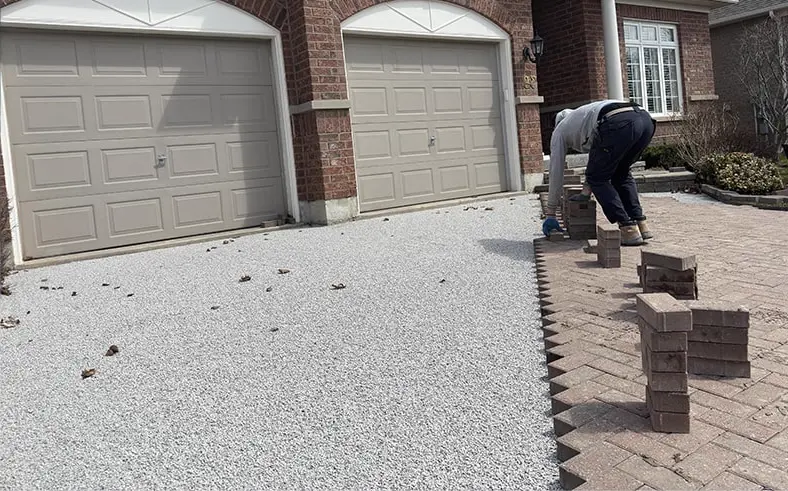
When your interlock pavers start sinking, shifting, or showing signs of wear, you’re faced with a critical decision: tackle the repair yourself or hire a professional? For Ottawa homeowners, this choice involves more than just comparing price tags. The real cost includes your time, the tools you’ll need to buy or rent, and most importantly, the risk of making expensive mistakes that could turn a simple repair into a complete replacement project.
In this comprehensive guide, we’ll break down the true costs of DIY interlock repair versus hiring professionals in Ottawa, examine the risks you need to understand, and help you make an informed decision that protects both your property value and your wallet.
Understanding Interlock Repair: What’s Actually Involved?
Before diving into cost comparisons, it’s crucial to understand what interlock repair actually entails. Unlike simple cosmetic fixes, proper interlock repair involves multiple technical steps that require specific knowledge of Ottawa’s climate, soil conditions, and drainage requirements.
Interlock repair typically includes removing damaged or sunken pavers, assessing and correcting the base material, ensuring proper drainage, reinstalling pavers with correct spacing, compacting the surface, and applying polymeric sand to lock everything in place. Each of these steps requires precision and understanding of how interlock systems function as integrated units, not just individual bricks.
The complexity increases significantly when you’re dealing with drainage issues, frost heave damage (extremely common in Ottawa’s freeze-thaw cycles), or structural problems with the base. What appears to be a simple sunken paver might actually indicate a much larger problem with your foundation or drainage system that a DIY approach could overlook or worsen.
The True Cost of DIY Interlock Repair in Ottawa
Tools and Materials You’ll Need
Many homeowners underestimate the investment required for even basic interlock repair. Here’s a realistic breakdown of what you’ll need and what it costs in the Ottawa market:
Essential Tools (Purchase or Rental):
- Plate compactor rental: $80-$120 per day (you’ll likely need it for 2-3 days)
- Masonry saw or angle grinder: $150-$400 to purchase, or $40-$60 per day to rent
- Rubber mallet: $25-$40
- Screed rails and screed board: $30-$50
- Level (48-inch or longer): $40-$80
- Landscape rake: $30-$50
- Wheelbarrow: $80-$150
- Safety equipment (gloves, knee pads, safety glasses, dust mask): $50-$80
Materials Cost Estimate:
- Granular base (per cubic yard): $40-$60
- Bedding sand (per cubic yard): $35-$50
- Polymeric sand (50 lb bag covers ~75 sq ft): $30-$45 per bag
- Edge restraints (if needed): $3-$6 per linear foot
- Replacement pavers: $4-$12 per square foot depending on style and availability
- Delivery fees for materials: $75-$150
For a modest 150 square foot repair project, you’re looking at approximately $500-$800 in materials alone, plus $250-$400 in tool rentals if you don’t already own them. That brings your total material and equipment cost to $750-$1,200 before you even start working.
Time Investment: The Hidden Cost
Professional crews can typically complete a 150 square foot interlock repair in 1-2 days. As a DIYer, expect to spend:
- Day 1: Removing pavers, assessing damage, purchasing/renting equipment (6-8 hours)
- Day 2: Excavating and preparing the base, making additional material runs as you discover problems (8-10 hours)
- Day 3: Laying and compacting base materials, fine-tuning drainage (6-8 hours)
- Day 4: Reinstalling pavers, cutting edge pieces, initial compaction (8-10 hours)
- Day 5: Final compaction, polymeric sand application, cleanup (4-6 hours)
That’s 32-42 hours of physical labor, spread across multiple weekends if you’re working around your regular job. If you value your time at even a modest $25 per hour, that’s an additional $800-$1,050 in opportunity cost.
Professional Interlock Repair Costs in Ottawa
Professional interlock repair costs in Ottawa typically range from $15-$30 per square foot for standard repairs, depending on complexity, access, and the extent of base work required. For our 150 square foot example, you’re looking at $2,250-$4,500 for professional service.
This might seem significantly higher than DIY costs at first glance, but this price includes:
- Complete diagnostic assessment of the underlying problem
- All materials, tools, and equipment
- Proper base correction and drainage solutions
- Warranty on workmanship (typically 2-5 years)
- Proper disposal of old materials
- Insurance coverage protecting you from liability
- Completion in 1-2 days instead of multiple weekends
When you factor in the true cost of DIY ($750-$1,200 in hard costs + $800-$1,050 in time value = $1,550-$2,250), the gap narrows considerably. And this assumes everything goes perfectly on your first try, which brings us to the most critical factor: risk.
The Risks of DIY Interlock Repair: What Can Go Wrong
Risk #1: Misdiagnosing the Problem
What looks like a simple sunken paver is often symptomatic of deeper issues. Without professional assessment, you might repair the surface while ignoring:
- Inadequate base depth or poor quality base material
- Drainage problems that will cause the same issue to recur
- Soil settlement or erosion underneath the interlock system
- Frost heave damage to edge restraints or base layers
Repairing symptoms instead of causes means you’ll be back doing the same repair in 1-2 years, doubling or tripling your total cost.
Risk #2: Improper Drainage and Long-Term Water Damage
Drainage is the single most critical factor in interlock longevity, especially in Ottawa where we experience significant freeze-thaw cycles. DIY repairs often fail to:
- Maintain or correct proper slope for water runoff (minimum 2% grade)
- Ensure adequate base drainage to prevent water accumulation
- Account for how water flows across the entire paved surface, not just the repair area
- Install or repair drainage channels where needed
Improper drainage can lead to water pooling, accelerated frost heave, foundation damage to your home, and premature failure of the entire interlock surface. The cost to fix water damage to your home’s foundation can easily reach $10,000-$30,000.
Risk #3: Voiding Warranties and Reducing Property Value
If your interlock was professionally installed and still under warranty, DIY repairs typically void that warranty completely. Additionally, when it comes time to sell your home, poorly executed repairs are obvious to home inspectors and can:
- Become negotiation points that reduce your sale price
- Raise red flags about other potential DIY work
- Require professional replacement before listing
Real estate agents report that obviously amateur repairs to visible features like driveways and patios can reduce offers by $2,000-$8,000 or more.
Risk #4: Physical Injury and Property Damage
Interlock repair is physically demanding work involving:
- Heavy lifting (pavers weigh 8-15 lbs each, base materials come in 60-80 lb bags)
- Operating power equipment (plate compactors, saws with diamond blades)
- Working in awkward positions for extended periods
- Exposure to silica dust from cutting pavers
Without proper technique and safety equipment, risks include back injuries, repetitive strain injuries, cuts from power tools, and respiratory issues from dust exposure. Your homeowner’s insurance may not cover injuries sustained during DIY construction projects, leaving you responsible for medical bills.
When DIY Makes Sense (And When It Doesn’t)
Good Candidates for DIY Repair:
- Small cosmetic repairs (replacing 1-5 cracked or stained pavers)
- Re-sanding joints with polymeric sand on stable, properly installed interlock
- Minor edge repairs where the base is still intact and properly sloped
- Projects where you have significant prior experience with masonry or hardscaping
- Situations where you already own the necessary tools and equipment
When You Should Hire a Professional:
- Any repair involving base work or excavation deeper than 2 inches
- Sunken areas that indicate settlement or drainage problems
- Repairs larger than 50 square feet
- Any work near your home’s foundation
- Repairs involving drainage correction or slope adjustment
- High-visibility areas like front driveways where quality matters for curb appeal
- Situations where the original installation is under warranty
- Complete interlock relaying projects where all pavers need to be lifted and reset
The Professional Advantage: What You’re Really Paying For
When you hire a professional interlock company for repairs, you’re not just paying for labor. You’re investing in:
Diagnostic Expertise: Professionals can identify the root cause of failures, not just surface symptoms. They understand Ottawa’s specific challenges including frost heave patterns, soil conditions, and drainage requirements for our climate.
Proper Techniques and Equipment: Commercial-grade compaction equipment, precision cutting tools, and techniques developed over thousands of projects ensure repairs that last. Learn more about professional techniques in our guide to lift and relay methods.
Warranty Protection: Reputable companies warranty their repair work, giving you recourse if problems develop. This warranty is backed by their insurance and business reputation.
Time Efficiency: What takes you multiple weekends takes professionals 1-2 days, minimizing disruption to your property use and protecting partially completed work from weather damage.
Code Compliance: Professionals ensure work meets local building codes and industry standards, important for property value and insurance coverage.
Making the Right Decision for Your Ottawa Property
The choice between DIY and professional interlock repair isn’t just about comparing upfront costs. It’s about evaluating:
- The true scope of the problem (surface cosmetic vs. structural base issue)
- Your skill level, available time, and physical capability
- The importance of the repair area (front driveway vs. back patio)
- Long-term property value considerations
- Risk tolerance for potential complications
For minor cosmetic repairs on stable surfaces, DIY can make sense if you’re handy and have time. But for anything involving base work, drainage, or areas larger than 50 square feet, professional repair typically delivers better long-term value despite higher upfront cost.
Get a Professional Assessment Before Deciding
Before committing to either DIY or professional repair, consider getting a professional assessment. Many companies offer free estimates that can help you understand:
- What’s actually causing your interlock problems
- The full scope of work needed for a lasting repair
- Realistic cost expectations for professional service
- Whether your situation is suitable for DIY or requires professional intervention
At Interlock Experts, we provide detailed assessments that diagnose the root cause of interlock problems and explain all your options. Even if you decide to attempt repairs yourself, you’ll have a clear understanding of what’s involved and what to watch for.
Explore our full range of professional interlock repair services or check our transparent pricing guide to understand what professional service costs in the Ottawa market.
Conclusion: The Real Bottom Line
DIY interlock repair can cost $1,550-$2,250 in materials, tools, and time for a modest project, with significant risks if you misdiagnose problems or execute incorrectly. Professional repair costs $2,250-$4,500 for the same project but includes diagnostic expertise, proper drainage correction, warranties, and peace of mind.
When you factor in the risk of having to redo failed DIY work, potential property damage from drainage errors, and the impact on property value, professional repair often represents better long-term value for all but the smallest cosmetic repairs.
The question isn’t just “Can I do this?” but “Should I do this?” Consider the complexity of your specific repair, the importance of the area to your property’s function and appearance, and your tolerance for potential complications.
Ready to discuss your interlock repair project? Contact Interlock Experts for a free assessment and detailed quote. We’ll help you understand exactly what your property needs and provide honest recommendations, whether that’s professional repair, guidance for DIY work, or a combination approach that makes sense for your situation.