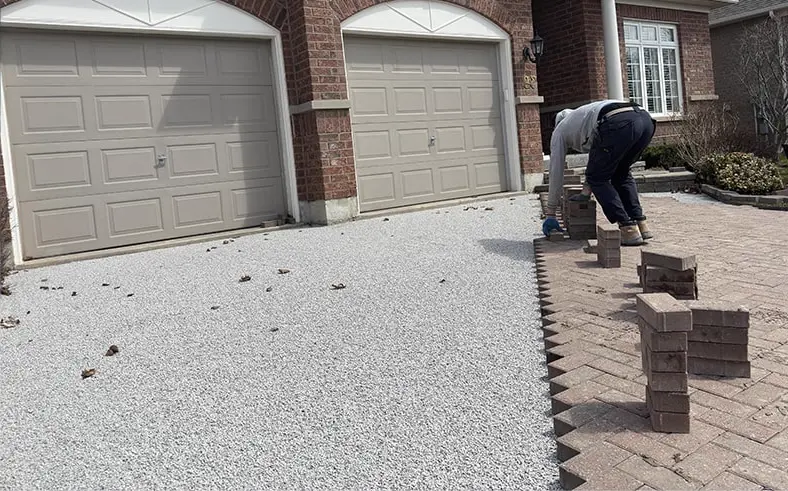
If you’ve noticed sections of your interlock driveway or patio sinking below the rest of the surface, you’re not alone. Sunken interlock is one of the most common issues homeowners in Ottawa face with their paved surfaces. While it may start as a minor inconvenience, ignoring sunken pavers can lead to water pooling, tripping hazards, and eventually, the need for a complete interlock relay.
Understanding why interlock sinks, how to address it, and when professional intervention is necessary can save you time, money, and frustration. In this comprehensive guide, we’ll explore everything you need to know about sunken interlock pavers.
What Causes Interlock to Sink?
Interlock pavers don’t sink on their own. The issue almost always stems from problems with the foundation or base layers beneath the visible surface. Here are the primary causes:
1. Poor or Inadequate Base Preparation
The foundation of any interlock installation is critical. A properly constructed base should consist of compacted granular material (typically crushed limestone) at a depth of 6-12 inches, depending on the application. When contractors cut corners by:
- Using insufficient base material depth
- Failing to compact the base properly
- Installing pavers directly on topsoil or clay
- Skipping the bedding sand layer
The result is inevitable settling and sinking over time. This is especially common in Ottawa’s freeze-thaw climate, where inadequate base preparation becomes apparent within the first few winters.
2. Drainage Issues and Water Infiltration
Water is the enemy of any paved surface. When water accumulates beneath interlock pavers, it can:
- Wash away bedding sand and base material
- Cause soil erosion underneath the base
- Create voids that lead to sudden sinking
- Freeze and expand during winter, pushing pavers upward, then leaving gaps when it melts
Poor grading, missing or clogged drainage systems, and downspouts directed onto paved surfaces all contribute to water-related sinking. Areas near Orleans and Nepean with clay-heavy soil are particularly vulnerable to drainage problems.
3. Soil Settlement and Subsurface Issues
Even with proper installation, natural soil settlement can cause interlock to sink. This is particularly common:
- On newly constructed homes where backfill hasn’t fully settled
- Over buried utilities or old septic systems
- In areas with organic-rich soil that decomposes over time
- Where tree roots have been removed, leaving voids
4. Heavy Vehicle Traffic
While interlock driveways are designed to handle vehicle weight, excessive or concentrated loads can cause localized sinking. This often happens:
- Where garbage trucks or delivery vehicles repeatedly stop
- At the end of driveways where cars park daily
- When RVs or heavy equipment are parked on surfaces designed for lighter use
5. Erosion from Adjacent Areas
Soil and base material can wash away from underneath pavers when water flows from adjacent properties, gardens, or lawns. This lateral erosion creates voids that cause progressive sinking, often starting at the edges and working inward.
Signs Your Interlock is Sinking
Early detection can prevent minor issues from becoming major problems. Watch for these warning signs:
- Visible dips or depressions in the surface
- Water pooling after rain instead of draining properly
- Lippage – when adjacent pavers sit at different heights
- Shifting or separating pavers with widening joints
- Cracked pavers due to uneven support
- Edge restraints pulling away from the installation
DIY Fixes for Minor Sinking
For small, isolated areas of sinking (less than 10 square feet), a DIY interlock repair may be feasible. Here’s how:
Tools and Materials Needed:
- Flat pry bar or screwdrivers
- Rubber mallet
- Level
- Coarse bedding sand (not play sand)
- Plate compactor (can be rented)
- Polymeric sand for joints
- Broom
Step-by-Step Process:
- Remove the affected pavers: Carefully pry up the sunken pavers and those immediately surrounding them. Start from the center of the sunken area and work outward.
- Assess the base: Check the condition of the bedding sand and base material. If it’s wet, compacted hard, or contaminated with soil, you’ll need to remove and replace it.
- Add and compact material: Add fresh bedding sand to raise the level. Compact in thin lifts (1-2 inches at a time) using the plate compactor. The sand should be slightly higher than needed, as it will compact down.
- Reinstall pavers: Place pavers back in their pattern, ensuring they’re level with surrounding pavers. Use the rubber mallet to tap them into place, checking with a level frequently.
- Fill joints: Sweep polymeric sand into the joints, mist lightly with water according to manufacturer instructions, and allow to cure.
When DIY Isn’t Enough
DIY repairs work for minor, isolated sinking. However, if you notice any of the following, it’s time to call professionals:
- Sinking covers a large area (more than 10-15 square feet)
- Multiple areas are affected across your driveway or patio
- Pavers sink again shortly after you fix them
- You find significant base erosion or water pooling beneath pavers
- The sinking is near structures (house foundation, retaining walls)
Professional Solutions: Lift and Relay vs. Full Reconstruction
When sinking is widespread or recurring, professional intervention is necessary. Contractors typically offer two approaches:
Lift and Relay
A lift and relay service involves:
- Removing all existing pavers (which can be reused if in good condition)
- Excavating and removing compromised base material
- Installing proper drainage solutions if needed
- Rebuilding the base with fresh, properly compacted granular material
- Installing new bedding sand
- Reinstalling pavers in their original or a new pattern
- Re-sanding joints with polymeric sand
This approach preserves your existing pavers while addressing the underlying problems. It’s often 40-60% less expensive than complete replacement and can be completed in 2-4 days for most residential driveways.
Full Reconstruction
Complete replacement is necessary when:
- Existing pavers are severely cracked, stained, or outdated
- You want to change the design, pattern, or size
- The original installation was so poor that base depth is inadequate
- Subsurface drainage systems need to be installed
- You’re expanding or reconfiguring the paved area
When Is a Full Relay Necessary?
Determining whether you need a simple repair, a lift and relay, or full reconstruction depends on several factors:
Choose Lift and Relay When:
- More than 25% of your surface has sunk or shows signs of settling
- You’ve attempted DIY repairs that failed within a season
- Water pools in multiple locations after rain
- Your pavers are in good condition aesthetically
- The original installation is less than 15 years old
- You want to preserve the existing color and pattern
Choose Full Reconstruction When:
- Pavers are heavily damaged, stained, or faded
- The installation is more than 15-20 years old
- You want to upgrade to a modern style or pattern
- Base depth is insufficient for your climate or use
- You’re adding features like heated driveways or permeable pavers
Preventing Future Sinking
Whether you choose repair, relay, or reconstruction, these preventive measures will help your interlock last:
1. Ensure Proper Drainage
- Grade surfaces away from structures at a minimum 2% slope
- Redirect downspouts away from paved areas
- Install perimeter drains in areas prone to water accumulation
- Keep joints filled with polymeric sand to prevent washout
2. Maintain Edge Restraints
Plastic or aluminum edge restraints prevent pavers from spreading and the base from washing out. Check annually and repair any loose or damaged sections.
3. Regular Maintenance
- Refill joints with polymeric sand every 2-3 years
- Clean surfaces regularly to prevent organic buildup
- Address any settling or shifting immediately
- Seal pavers every 3-5 years to resist water penetration
4. Choose Quality Installation
The initial installation quality is the single biggest factor in preventing sinking. When hiring a contractor, ensure they:
- Excavate to proper depth (minimum 12″ for driveways, 8″ for patios)
- Use 3/4″ clear limestone or similar approved base material
- Compact base in lifts using a plate compactor (minimum 5,000 lb force)
- Install geotextile fabric between soil and base in clay soils
- Use proper bedding sand (coarse concrete sand, not mason sand)
- Install edge restraints around the entire perimeter
The Cost Factor: Repair vs. Relay vs. Replace
Understanding the investment required helps in decision-making:
- DIY spot repair: $50-$200 in materials for small areas
- Professional spot repair: $300-$800 depending on size
- Lift and relay: $8-$15 per square foot
- Full replacement: $15-$30 per square foot
While lift and relay costs more upfront than spot repairs, it addresses root causes and prevents the cycle of repeated repairs. For a typical 400 sq ft driveway, a lift and relay might cost $3,200-$6,000 compared to $6,000-$12,000 for complete replacement.
Why Ottawa’s Climate Makes Prevention Critical
Ottawa’s freeze-thaw cycles are particularly harsh on interlock installations. When water infiltrates a compromised base and freezes, it expands, pushing pavers upward. When it melts, voids are left behind, causing sinking. This cycle accelerates deterioration, making proper installation and drainage absolutely critical in our climate.
Ready to Fix Your Sunken Interlock?
Sunken interlock doesn’t fix itself, and delaying repairs only makes the problem worse and more expensive. Whether you need a simple repair or a complete relay, addressing the issue now protects your investment and prevents safety hazards.
At Interlock Experts, we specialize in diagnosing and fixing sunken interlock throughout Ottawa and surrounding areas. Our experienced team can assess your situation, explain your options honestly, and complete repairs that last. We offer free consultations and transparent pricing for all repair and relay services.
Don’t let sunken pavers damage your property value or create hazards. Contact Interlock Experts today for a free assessment and quote. We’ll help you determine whether a simple fix or a full relay is the right solution for your specific situation.