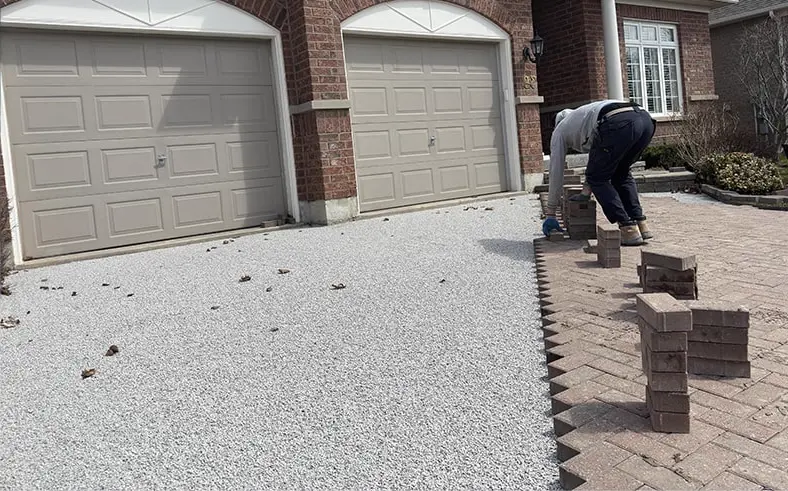
If you’ve invested in a beautiful interlock driveway or patio in Ottawa, you’ve likely heard about polymeric sand. This specialized product has revolutionized the interlock industry, but many homeowners don’t fully understand what it does, when it needs replacing, or—perhaps most importantly—what problems it can’t solve.
As Ottawa’s premier interlock specialists, we’ve worked with polymeric sand on hundreds of projects across Stittsville, Gloucester, and throughout the city. In this comprehensive guide, we’ll break down everything you need to know about this essential component of your interlock surface.
What Is Polymeric Sand?
Polymeric sand is a mixture of fine sand and polymer additives designed specifically for filling the joints between interlocking pavers. When properly installed and activated with water, the polymers bind the sand particles together, creating a semi-flexible, erosion-resistant material that locks your pavers in place.
How Polymeric Sand Works
The science behind polymeric sand is surprisingly sophisticated. The product contains:
- Fine sand particles that fill the narrow gaps between pavers
- Polymer additives that activate when exposed to water
- Binding agents that create structural integrity once cured
When you apply water to freshly swept polymeric sand, the polymers activate and begin binding the sand particles together. Over the next 24-48 hours, this mixture hardens into a semi-rigid material that resists erosion, weed growth, and insect infiltration while still allowing for slight movement as pavers naturally shift with freeze-thaw cycles.
The Benefits of Polymeric Sand for Ottawa Homes
In Ottawa’s harsh climate, polymeric sand offers several critical advantages over traditional jointing sand:
Superior erosion resistance: Traditional sand washes away during heavy rainstorms or snowmelt. Polymeric sand stays put, even during Ottawa’s intense spring runoff season.
Weed prevention: By creating a solid barrier in paver joints, polymeric sand makes it extremely difficult for weed seeds to germinate and take root between your pavers.
Ant deterrent: While not a complete solution (more on this later), polymeric sand creates a much less hospitable environment for ants compared to loose sand, which they easily excavate for nesting.
Freeze-thaw performance: Quality polymeric sand is designed to flex slightly with temperature changes, reducing the risk of joint failure during Ottawa’s dramatic temperature swings.
Aesthetic consistency: Because it doesn’t wash out, polymeric sand maintains a uniform appearance in your interlock driveway or patio year after year.
When Does Polymeric Sand Need Replacement?
Even the best polymeric sand doesn’t last forever. Ottawa’s climate is particularly tough on outdoor materials, and polymeric sand is no exception. Here are the telltale signs that it’s time for replacement:
1. Visible Erosion or Missing Sand
If you can see gaps between your pavers where sand has washed or blown away, it’s definitely time for replacement. These gaps allow water infiltration, which can undermine your base and lead to paver settling or shifting.
2. Crumbling or Powdery Texture
Quality polymeric sand should feel solid, almost like soft concrete. If the material in your joints crumbles easily when touched or has turned powdery, the polymers have broken down and the sand is no longer providing adequate support.
3. Weed Growth Between Pavers
A few stray weeds don’t necessarily mean your polymeric sand has failed, but extensive weed growth is a clear indicator that the jointing material has deteriorated enough to allow seed germination and root penetration.
4. Ant Activity
Finding small piles of sand on your pavers or noticing ants tunneling through joints suggests the polymeric sand has lost its binding properties. Ants can’t easily excavate properly installed, cured polymeric sand, so their presence indicates material failure.
5. Age and Weather Exposure
In Ottawa’s climate, you should expect to replace polymeric sand every 8-15 years, depending on quality, installation, sun exposure, and drainage conditions. South-facing driveways and patios typically need replacement sooner due to increased UV exposure and more frequent freeze-thaw cycles.
6. Paver Movement or Settling
If your pavers have become loose or you notice sections that have settled unevenly, the polymeric sand is no longer providing the lateral support necessary to keep pavers locked in position. This often requires comprehensive interlock repair, not just sand replacement.
What Polymeric Sand Won’t Fix: Understanding Its Limitations
This is where many homeowners develop unrealistic expectations. Polymeric sand is an excellent product, but it’s not a miracle cure for all interlock problems. Here’s what it can’t do:
It Won’t Fix Base Problems
Polymeric sand only fills the joints between pavers—it doesn’t address issues with the gravel base or bedding layer beneath. If your interlock is settling due to poor base preparation, inadequate drainage, or soil subsidence, replacing the polymeric sand will only provide a temporary cosmetic fix.
Proper interlock installation requires a minimum 6-8 inch compacted gravel base in Ottawa’s climate. If this wasn’t done correctly during initial installation, you’ll experience ongoing problems that no amount of polymeric sand can resolve.
It Won’t Permanently Eliminate Ants
While polymeric sand makes it much harder for ants to establish colonies in your paver joints, determined ants can sometimes still find their way through compromised areas or create new pathways. Additionally, if ants establish a colony beneath your pavers, they may push sand out from below, gradually breaking down the polymeric sand from underneath.
Professional polymeric sand installation combined with perimeter ant control provides the best defense, but it’s not 100% guaranteed forever.
It Won’t Stop All Weeds
Polymeric sand dramatically reduces weed growth, but some particularly aggressive weeds can eventually find microscopic cracks or compromised areas. Seeds that land on top of pavers and send roots down between joints can sometimes establish themselves despite the polymeric sand barrier.
The key is understanding that polymeric sand reduces weed growth by about 95-98% compared to regular sand—a massive improvement, but not total elimination.
It Won’t Compensate for Poor Drainage
If your interlock surface doesn’t have adequate slope for water runoff or if drainage around the perimeter is inadequate, water will pool and eventually compromise any jointing material, including polymeric sand. Proper grading and drainage are fundamental requirements that must be addressed during initial installation.
It Won’t Prevent Color Fading
UV exposure gradually fades polymeric sand just like it fades the pavers themselves. While this doesn’t affect performance, some homeowners expect the sand to maintain its original color indefinitely. Quality polymeric sand includes UV inhibitors to slow fading, but some change over time is normal.
It Won’t Solve Slope or Pitch Problems
If your driveway or patio was installed without proper slope, water will pond regardless of your jointing material. Polymeric sand helps prevent erosion once water drains away, but it can’t create slope where none exists.
The Ottawa Climate Factor
Ottawa’s weather presents unique challenges for polymeric sand:
Extreme freeze-thaw cycles: We experience some of Canada’s most dramatic temperature swings, with winter temperatures dropping to -30°C and summer highs reaching 30°C. This 60-degree range causes expansion and contraction that stresses all materials.
Heavy spring runoff: When snow melts rapidly in spring, the volume of water flowing across interlock surfaces can challenge even properly installed polymeric sand.
Road salt exposure: For driveways near streets or properties where salt is applied, chemical degradation can accelerate polymeric sand breakdown.
UV intensity: Ottawa’s latitude means intense summer sun exposure that can degrade polymer bonds over time, particularly on south-facing surfaces.
These factors are why professional installation matters so much in our region. Proper compaction, adequate curing time, and appropriate product selection for Ottawa’s climate make the difference between polymeric sand that lasts 8 years versus 15 years.
Professional Installation vs. DIY: Why It Matters
Installing polymeric sand seems straightforward—sweep it into joints and add water—but there’s significant skill involved:
- Joint preparation: Joints must be completely clean and dry to the proper depth
- Compaction technique: Proper compaction ensures sand fills joints completely without creating voids
- Water application: Too much water washes out polymers; too little prevents proper activation
- Timing: Weather conditions during installation and the 24-48 hour curing period are critical
- Haze removal: Polymer haze must be removed from paver surfaces before it cures
DIY installation often results in premature failure, requiring complete removal and reinstallation within 2-3 years. Professional installation typically provides 10-15 years of service.
When to Consider Professional Polymeric Sand Replacement
You should consult a professional when:
- More than 30% of joints show deterioration
- You notice paver movement or settling
- Extensive weed or ant problems have developed
- The surface is more than 10 years old
- You’re experiencing drainage issues
- Previous DIY attempts have failed
Professional assessment can determine whether you need simple sand replacement or more comprehensive repairs to address underlying issues.
Protect Your Investment in Interlock
Polymeric sand is a critical component of any quality interlock installation, but it’s just one element of a properly constructed system. Understanding what it does, when it needs attention, and what it can’t fix helps you maintain realistic expectations and make informed decisions about your property.
Whether you’re dealing with an aging driveway, a deteriorating patio, or planning new construction, professional installation and periodic maintenance will maximize the lifespan of your investment.
Need Expert Polymeric Sand Installation in Ottawa?
At Interlock Experts, we’ve installed and replaced polymeric sand on hundreds of driveways and patios across the city. We understand Ottawa’s climate challenges and use only premium products designed for Canadian conditions.
If you’re experiencing polymeric sand failure, noticing weeds or ants between pavers, or simply want to ensure your interlock surface is properly maintained, we’re here to help. Our team serves all of Ottawa, including Stittsville, Gloucester, Kanata, Barrhaven, and surrounding areas.
Contact us today for a free assessment. We’ll evaluate your current polymeric sand condition, identify any underlying issues, and provide honest recommendations for repair or replacement. Don’t wait until small problems become major repairs—let’s protect your interlock investment together.
Call us now or request your free quote online. Your interlock deserves the best care, and we’re Ottawa’s trusted experts for professional polymeric sand installation and comprehensive interlock repair services.