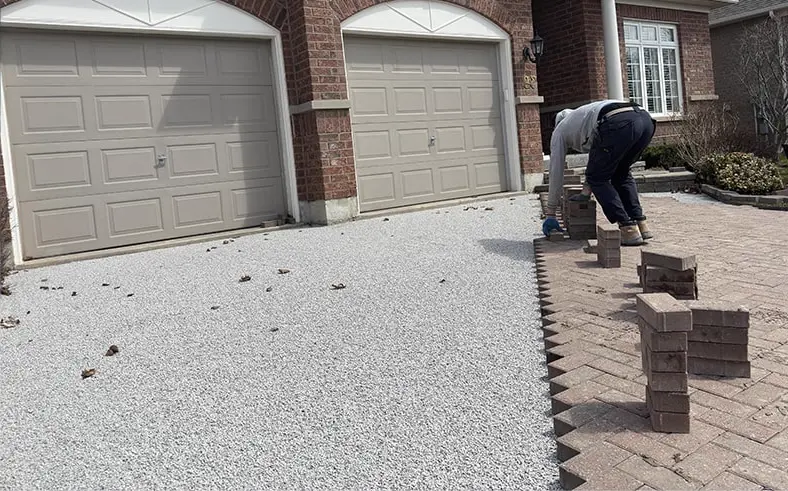
If your interlock driveway or patio has started to settle, sink, or develop uneven patches, you might be wondering whether you need a complete replacement or if there’s a more cost-effective solution. The good news is that many interlock problems can be fixed through a process called “lift and relay” – a restoration technique that can save you thousands of dollars while giving your surface a like-new appearance.
In this comprehensive guide, we’ll explain exactly what lift and relay is, when it’s the right solution for your property, what problems it fixes, and how it compares to full replacement in terms of cost and results.
What Is Lift and Relay?
Lift and relay (also called “reset” or “re-lay”) is a restoration process where existing interlock pavers are carefully removed, the base is corrected and re-prepared, and the same pavers are reinstalled in their proper position. Think of it as giving your interlock surface a complete structural refresh without the expense of new materials.
The Lift and Relay Process Step-by-Step
Understanding the process helps homeowners appreciate the craftsmanship involved and why it’s often the best solution for settling or drainage issues:
1. Careful Paver Removal
Professional installers methodically remove each paver, often numbering or photographing the pattern to ensure accurate reinstallation. This is especially important for complex patterns or borders. The pavers are cleaned and inspected during removal, with any damaged units set aside for replacement.
2. Base Inspection and Diagnosis
Once pavers are removed, the underlying base is thoroughly inspected. This is where the root cause of settling becomes clear – whether it’s poor compaction, inadequate base depth, erosion from water infiltration, or soil issues beneath the base.
3. Base Correction and Repair
The existing base material is either removed entirely or supplemented depending on the severity of the issue. In most cases, fresh granular base (typically ¾-inch clear stone) is added and properly compacted in 2-3 inch lifts using a plate compactor. If drainage was an issue, corrective grading or drainage solutions may be installed at this stage.
4. Bedding Sand Application
A fresh 1-inch layer of coarse bedding sand is screeded perfectly level across the compacted base. This layer allows for minor adjustments and ensures pavers sit evenly.
5. Paver Reinstallation
The cleaned pavers are carefully reinstalled following the original pattern. Experienced installers ensure consistent joint spacing (typically 1/8 inch) and check levels continuously to prevent any low or high spots.
6. Edge Restraint and Compaction
Proper edge restraints are installed or reinforced to prevent spreading. The entire surface is then compacted using a plate compactor with a protective pad to seat the pavers firmly into the bedding sand.
7. Joint Sand and Sealing
Finally, polymeric sand is swept into all joints and activated according to manufacturer specifications. This locks the pavers together and prevents weed growth and ant infiltration. Many homeowners opt for sealing at this point for added protection and enhanced color.
When Do You Need Lift and Relay?
Not every interlock problem requires lift and relay, and not every issue can be fixed with it. Here’s when this solution is ideal:
Perfect Candidates for Lift and Relay
Settling and Sinking Areas
If sections of your interlock driveway or patio have settled more than ½ inch, creating trip hazards or drainage issues, lift and relay is typically the best solution. This commonly occurs near garage doors, at the transition between driveway and garage apron, or in areas where water has eroded the base.
Drainage Problems
When water pools on your interlock surface instead of draining properly, it indicates improper grading or base settlement. Lift and relay allows for corrective grading and ensures water flows away from your home’s foundation – a critical issue that only gets worse with time.
Lippage (Uneven Pavers)
Pavers that have become uneven with some higher than others create an unsightly and potentially dangerous surface. This “lippage” is often caused by inadequate initial compaction or base erosion and is perfectly corrected through lift and relay.
Spreading or Shifting Pavers
If your pavers have widened joints or shifted from their original position, it’s usually due to inadequate or failed edge restraint. Lift and relay provides the opportunity to install proper commercial-grade edge restraints that prevent future movement.
Failed Joint Sand
When joint sand has washed out repeatedly despite refilling, or when weed and ant infiltration is persistent, the pavers may need to be lifted to address base issues and allow for proper polymeric sand installation.
When Lift and Relay May Not Be Enough
There are situations where lift and relay isn’t the right solution:
Severely Damaged Pavers
If more than 25-30% of your pavers are cracked, spalled (surface flaking), or broken, and replacement pavers aren’t available in your color and style, full replacement might be more cost-effective.
Discontinued Paver Styles
If you love your current pavers but they’re discontinued and you need to replace more than a few, matching pavers may be impossible to source. In these cases, you might need to choose between lift and relay with mismatched replacement pavers or complete replacement with a new style.
Structural Foundation Issues
If your property has foundation settlement, shifting retaining walls, or significant soil movement, these underlying structural issues must be addressed before any interlock work. Lift and relay won’t fix problems caused by ongoing structural movement.
Original Installation Under 4 Inches of Base
If the original installation used less than the recommended 4-6 inches of compacted granular base (common in older or budget installations), you may need complete removal and reinstallation with proper base depth, especially for driveways that support vehicle traffic.
What Problems Does Lift and Relay Fix?
Lift and relay addresses the most common interlock failures that homeowners encounter:
Base-Related Issues
The majority of interlock problems originate from the base – the foundation that sits below the visible pavers. Poor compaction during original installation, erosion from water infiltration, or inadequate base depth all lead to settling over time. Lift and relay completely corrects these foundational issues.
Drainage and Water Management
Proper drainage is critical for interlock longevity. When surfaces settle or were originally installed without proper slope, water accumulation leads to accelerated deterioration, ice formation in winter, and potential foundation damage. Lift and relay allows contractors to reestablish proper grading, typically a minimum 2% slope away from structures.
Aesthetic Concerns
Beyond structural issues, lift and relay dramatically improves appearance. Uneven surfaces, wide or inconsistent joints, staining from failed polymeric sand, and minor lippage all disappear when the surface is properly reset. The cleaned and reinstalled pavers often look remarkably close to new.
Safety Hazards
Trip hazards from settled or uneven pavers create liability concerns for homeowners. Even a ½-inch height difference between pavers can cause trips and falls. Lift and relay eliminates these hazards completely, creating a smooth, even surface that’s safe for everyone from young children to elderly visitors.
Lift and Relay vs. Full Replacement: Making the Right Choice
The decision between lift and relay and complete replacement comes down to several factors:
Cost Comparison
Lift and relay typically costs 50-70% of full replacement, with Ottawa-area pricing generally ranging from $8-$14 per square foot depending on the extent of base repair needed. Full replacement usually runs $15-$25+ per square foot including new pavers, base preparation, and installation.
For a typical 500 square foot driveway, this translates to:
- Lift and Relay: $4,000 – $7,000
- Full Replacement: $7,500 – $12,500+
The savings are substantial, especially when your existing pavers are in good condition.
Environmental Considerations
Lift and relay is inherently more environmentally friendly. It keeps perfectly good pavers out of landfills, reduces the energy and resources needed to manufacture new pavers, and minimizes transportation emissions. For environmentally conscious homeowners, this is a significant advantage.
Timeline Differences
Interestingly, lift and relay often takes nearly as long as replacement – typically 2-4 days for a standard driveway. The careful removal and cleaning process requires time and precision. However, there’s no waiting for new paver delivery, which can sometimes delay replacement projects.
When to Choose Replacement Instead
Full replacement makes sense when:
- You want to change the color, style, or pattern of your interlock
- More than 30% of pavers are damaged beyond repair
- You’re expanding the paved area significantly
- The original base is severely inadequate (less than 3 inches)
- You want to upgrade to permeable pavers for better drainage
How Long Does Lift and Relay Last?
When properly executed by experienced contractors, lift and relay should last just as long as a new installation – typically 20-30+ years. The key is that the underlying problems are corrected during the process.
The longevity depends on several factors:
Quality of Base Preparation
Proper base depth (minimum 6 inches for driveways), correct material (¾-inch clear stone), and thorough compaction in lifts are essential. Experienced contractors like Interlock Experts don’t cut corners on base work – it’s the foundation of longevity.
Drainage Solutions
If drainage was an issue, it must be properly addressed during lift and relay. This might include adding drainage channels, catch basins, or adjusting grades. Without correcting drainage, problems will recur.
Edge Restraint
Commercial-grade edge restraints (typically aluminum or heavy-duty plastic) must be installed around the entire perimeter. This prevents the spreading that causes many interlock failures.
Quality Polymeric Sand
Using premium polymeric sand and installing it according to manufacturer specifications creates a stable, weed-resistant surface that maintains joint integrity for years.
Lift and Relay for Different Applications
Driveways
Driveways are the most common candidates for lift and relay, particularly in areas that support regular vehicle traffic. The weight of cars and trucks accelerates base compaction issues, making settling more noticeable. Interlock repair through lift and relay restores structural integrity and prevents further deterioration.
Patios and Walkways
While these surfaces don’t support vehicular loads, they still settle due to water infiltration, freeze-thaw cycles, and inadequate initial compaction. Lift and relay is often the perfect solution since the pavers themselves typically remain in excellent condition.
Pool Decks
Pool surrounds require special attention to drainage and slope. Lift and relay allows contractors to correct grading issues that cause water pooling – a common problem with pool decks that affects both safety and aesthetics.
Regional Considerations for Ottawa Homeowners
Ottawa’s climate presents unique challenges for interlock surfaces that make lift and relay particularly valuable:
Freeze-Thaw Cycles
Our region experiences numerous freeze-thaw cycles each winter. When water infiltrates a poorly compacted base and freezes, it expands, causing heaving. Thawing leads to settling. Proper base preparation during lift and relay helps resist these forces.
Heavy Snow Loads
Snow accumulation and the weight of snow removal equipment can stress interlock surfaces. A properly reset surface with correct base compaction handles these loads without issue.
Clay Soil Conditions
Many Ottawa neighborhoods, particularly in Orleans, Nepean, and surrounding areas, have clay-rich soils that retain water and shift with seasonal moisture changes. Proper base installation during lift and relay creates a stable platform that’s isolated from soil movement below.
DIY vs. Professional Lift and Relay
While some homeowners consider DIY lift and relay to save money, this is generally not recommended for several reasons:
Specialized Equipment Required
Proper compaction requires commercial plate compactors with specific vibration frequencies. Edge restraint installation needs specialized tools. Inadequate equipment leads to poor results.
Technical Knowledge
Understanding proper base depth, compaction techniques, grading for drainage, and paver installation best practices comes from years of experience. Mistakes during lift and relay can actually make problems worse.
Physical Demands
Removing, cleaning, and reinstalling hundreds or thousands of pavers is extremely labor-intensive. Most pavers weigh 8-12 pounds each, and a typical driveway contains 1,500-2,500+ pavers.
Warranty and Guarantees
Professional contractors stand behind their work with warranties. DIY projects have no such protection, and fixing mistakes often costs more than hiring professionals initially.
Questions to Ask Your Contractor
When seeking quotes for lift and relay, ask these important questions:
- What base depth will you install? (Minimum 6 inches for driveways, 4 inches for patios)
- How will you compact the base? (Should be in 2-3 inch lifts with a plate compactor)
- What type of edge restraint will you use? (Commercial-grade aluminum or heavy-duty plastic)
- Will you address drainage issues? (Proper grading is essential)
- What type of polymeric sand do you use? (Should be a quality brand like Techniseal or Alliance)
- Do you provide a written warranty? (Reputable contractors offer 2-5 year warranties on workmanship)
- Can you provide references from similar projects? (See their lift and relay work firsthand)
Cost Factors That Affect Lift and Relay Pricing
Several variables influence the final cost of your project:
Extent of Base Repair
Simple releveling with minor base addition costs less than complete base replacement. Your contractor should inspect and provide a detailed scope.
Area Size
Larger areas benefit from economies of scale, with per-square-foot costs decreasing on bigger projects.
Access and Site Conditions
Difficult access requiring hand-bombing of materials, steep slopes, or challenging site conditions increase labor costs.
Drainage Improvements
Adding catch basins, drainage channels, or extensive regrading adds to the base cost but is often necessary for long-term success.
Pattern Complexity
Simple running bond patterns are quicker to reinstall than complex herringbone or custom patterns with borders and inlays.
Sealing
While optional, sealing adds $2-$4 per square foot but enhances appearance, protects against stains, and extends surface life.
Maintaining Your Surface After Lift and Relay
To maximize the lifespan of your restored interlock:
- Wait 30-60 days before sealing to allow polymeric sand to fully cure
- Sweep regularly to prevent debris accumulation in joints
- Clean stains promptly using appropriate cleaners for the stain type
- Avoid de-icing salts in winter – use sand or calcium magnesium acetate instead
- Inspect joints annually and refill polymeric sand as needed
- Reseal every 3-5 years if you choose to seal your surface
- Address drainage issues immediately if water begins pooling
Ready to Restore Your Interlock Surface?
Lift and relay is a proven, cost-effective solution that addresses the root causes of interlock settling, drainage issues, and unevenness. When performed by experienced professionals using proper techniques and materials, it delivers results that last for decades at a fraction of the cost of complete replacement.
At Interlock Experts, we’ve restored hundreds of driveways, patios, and walkways throughout Ottawa and surrounding communities using lift and relay techniques. Our team has the experience to properly diagnose your interlock issues, recommend the right solution, and execute the work with precision and attention to detail.
Whether you’re dealing with a settled driveway in Kanata, drainage issues with your Barrhaven patio, or uneven pavers anywhere in the Ottawa region, we can help. We provide free, no-obligation assessments where we’ll inspect your surface, explain exactly what’s needed, and provide transparent pricing.
Contact Interlock Experts today for a free consultation. Let us show you how lift and relay can restore your interlock surface to like-new condition while saving you thousands compared to replacement. Call us or visit our interlock repair services page to learn more and schedule your assessment.
Don’t let settling and drainage issues continue to worsen – with professional lift and relay, you can have a beautiful, safe, and long-lasting interlock surface that enhances your property for years to come.