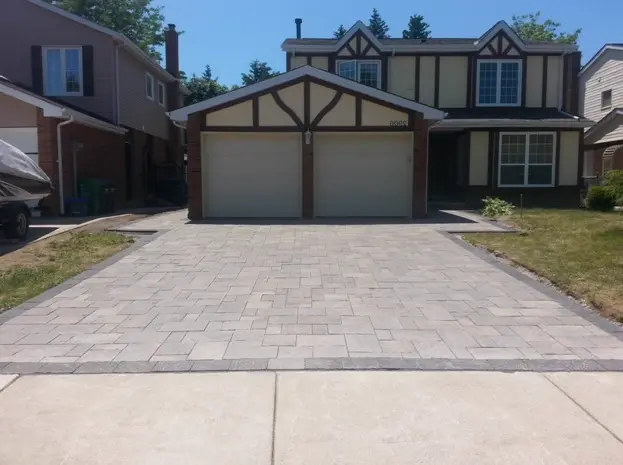
Driveway Sinking on One Side: What’s Causing It and How We Fix It
Discover why your interlock driveway is sinking on one side in Ottawa and learn about professional diagnosis and repair solutions. From drainage issues to base problems, we explain causes, costs, and permanent fixes.
If you’ve noticed your interlock driveway sinking on one side in Ottawa, you’re not alone. This is one of the most common driveway issues we encounter, and it’s rarely just a cosmetic problem. One-sided sinking typically signals an underlying issue that, if left unaddressed, will only worsen over time. The good news? With proper diagnosis and repair, we can fix it permanently.
In this comprehensive guide, we’ll walk you through everything you need to know about why driveways sink on one side, how we diagnose the root cause, and the professional repair solutions that actually work.
What Causes a Driveway to Sink on One Side?
Unlike general settling that affects an entire driveway, one-sided sinking points to a localized problem. Here are the six most common culprits we see in Ottawa:
1. Water Drainage Issues
Water is the number one enemy of interlock driveways. When water consistently pools on one side of your driveway, it slowly erodes the base material underneath. Over time, this erosion creates voids that allow the pavers above to sink. In Ottawa’s freeze-thaw climate, this problem accelerates as water freezes, expands, and further degrades the base.
Look for signs like: water pooling after rain, ice formation on one side in winter, or visible channels where water flows across your driveway.
2. Downspout Discharge Problems
Many homeowners unknowingly direct their downspouts to discharge right beside their driveway. This concentrated flow of water—especially during heavy Ottawa rainstorms—can quickly undermine the base material. Hundreds of gallons of water flowing from your roof directly onto the driveway edge creates erosion hot spots that lead to dramatic sinking.
This is particularly common on the garage side of driveways where downspouts are positioned for convenience rather than proper drainage.
3. Tree Root Activity
Tree roots near your driveway can cause sinking in a counterintuitive way. Initially, roots may lift one side of your driveway as they grow. But when those roots are cut during tree removal or die back naturally, the soil that was displaced settles back down—often unevenly. This creates significant sinking on the side where the root activity was concentrated.
Even living trees can cause issues by absorbing moisture from the soil on one side, causing differential compaction.
4. Poor Original Compaction
If your driveway was installed by contractors who didn’t properly compact the base material, you might not see problems for years. Eventually, though, the less-compacted areas settle more than properly compacted sections. This often happens when one side of the driveway was excavated at a different time, or when the crew rushed through compaction on one section.
Proper base installation requires compaction in 2-3 inch lifts with a plate compactor or roller. Shortcuts here lead to problems later.
5. Soil Composition Differences
Ottawa’s varied geology means you might have different soil types on different sides of your property. Clay on one side and sandy soil on the other will react differently to moisture and compaction. Clay expands when wet and contracts when dry, while sand drains well but can shift. These different behaviors can cause one side to settle more than the other.
This is especially common in newer subdivisions where lots were cut and filled during development.
6. Underground Water Flow
Subsurface water movement is invisible but destructive. Underground water flow can slowly carry away fine particles from your driveway base on one side, creating voids that lead to sinking. This often happens when: there’s a spring on your property, your lot is on a slope, or when foundation drainage from your home or a neighbor’s home flows underneath your driveway.
These issues require professional diagnosis as they’re not immediately visible.
Our Professional Diagnosis Process
Before we can fix your sinking driveway, we need to identify the root cause. Here’s how we approach diagnosis:
Visual Inspection
We examine the entire driveway for signs of settlement patterns, cracks, and displacement. We look at adjacent structures (house foundation, garage, retaining walls) for clues about soil movement. We check the edges for signs of base material washout or erosion.
Water Flow Analysis
We trace how water moves across your property during rain events. Where do downspouts discharge? Is there a natural slope directing water toward the driveway? Are there low spots where water pools? Understanding water movement is crucial for permanent repairs.
Soil Assessment
When we remove pavers from the affected area, we examine the base material and subgrade soil. Is the base material appropriate? Has it been washed away? Is the soil saturated? This hands-on assessment reveals what’s happening beneath the surface.
Repair Options Based on Severity
Not all sinking driveways require the same repair approach. We tailor our solution to the severity of the problem:
Minor Sinking (1-2 Inch Drop)
Solution: Lift and relay affected section with base leveling
For minor sinking, we carefully remove the pavers from the affected area, add and compact additional base material to bring it level, then reinstall the pavers. This works when the base material is still in good condition and the problem is limited to slight settling.
Cost Range: $800-$2,000
Timeline: 1 day
Moderate Sinking (2-4 Inch Drop)
Solution: Complete relay with base correction and drainage fix
Moderate sinking typically indicates base erosion or drainage problems that need addressing. We remove pavers from a larger area, excavate damaged base material, install new properly-graded base, compact in lifts, and add drainage solutions like catch basins or perforated pipe to prevent recurrence.
This level of interlock repair addresses not just the symptom but the underlying cause.
Cost Range: $2,000-$4,000
Timeline: 2 days
Severe Sinking (4+ Inch Drop)
Solution: Complete base rebuild with comprehensive drainage system
Severe sinking means significant base failure. This requires excavating the entire affected area down to stable subgrade, potentially addressing soil issues, installing proper drainage infrastructure (French drain, catch basins, drainage pipe), rebuilding the base with fresh ¾” clear stone in compacted lifts, and reinstalling pavers with proper edge restraints.
While this is the most involved repair, it’s the only way to ensure the problem won’t return.
Cost Range: $4,000-$8,000+
Timeline: 2-3 days
Drainage Solutions That Prevent Recurrence
Fixing the sinking is only half the battle—preventing it from happening again requires proper drainage:
- French Drain: A perforated pipe in a gravel-filled trench that intercepts water before it reaches your driveway base
- Catch Basin: A drainage box that collects surface water and directs it away through underground piping
- Regrading: Adjusting the slope of your driveway and surrounding areas to direct water away from problem zones
- Downspout Extensions: Moving roof water discharge points away from the driveway edge
- Swale Creation: A shallow drainage channel that directs water around rather than across your driveway
The right drainage solution depends on your specific situation. Sometimes a simple downspout extension solves the problem; other times, a comprehensive drainage system is necessary.
Why Addressing the Root Cause Matters
We’ve seen too many homeowners who hired contractors to simply “level out” their sinking driveway without addressing why it sank in the first place. Within a year or two, the same area sinks again—sometimes worse than before.
True professional interlock driveway repair means diagnosing the cause and fixing it permanently. Yes, this might cost more upfront, but it saves you from paying for the same repair multiple times.
When we fix a sinking driveway, we guarantee our work because we address the root cause, not just the symptoms.
How Long Does Repair Take?
Most one-sided driveway sinking repairs take 1-3 days depending on severity:
- Day 1: Remove pavers, excavate as needed, address drainage issues, install new base material
- Day 2: Continue base work if needed, reinstall pavers, compact, install edge restraints
- Day 3: (If needed) Final grading, cleanup, polymeric sand installation
We work efficiently to minimize disruption to your daily routine. In most cases, you’ll have full use of your driveway within 2-3 days.
What About Warranties?
A proper driveway sinking repair should include a settling warranty. We stand behind our work because we fix the underlying problem:
- Workmanship Warranty: Our installation work is guaranteed against defects
- Settling Warranty: When we rebuild a base properly, it won’t settle again (barring new issues like plumbing leaks)
- Material Quality: We use proper base materials that meet industry standards
Be wary of contractors who won’t warranty their sinking repairs—it often means they’re not addressing the root cause.
Can This Be Prevented in New Driveways?
Absolutely. If you’re planning a new interlock driveway, insist on:
- Proper base depth: Minimum 6-8 inches of compacted ¾” clear stone for driveways
- Compaction in lifts: Base material compacted in 2-3 inch layers, not all at once
- Drainage planning: Proper slope, edge drainage, and water management designed from the start
- Geotextile fabric: Separation fabric between subgrade and base prevents mixing and migration
- Quality edge restraints: Proper edging prevents lateral movement that can lead to sinking
Quality installation costs a bit more upfront but saves thousands in future repairs.
Real Ottawa Example: Kanata Driveway Recovery
Last spring, we worked on a Kanata property where the entire right side of the driveway had sunk 5 inches. The homeowner had already paid another contractor $1,500 to “fix” it the previous year—but it sank again within months.
When we investigated, we found the original installer had placed the driveway over poorly-compacted fill from a recent yard grading project. The previous repair contractor had simply added pavers on top without addressing the base.
We excavated 14 inches deep on the affected side, removed the fill, compacted the native soil, installed proper base in compacted lifts, and added a French drain along the edge. Total cost: $5,200. Three years later, it’s still perfectly level.
The lesson? Proper diagnosis and repair cost more initially but far less than repeated band-aid fixes.
When to Call a Professional
If your driveway has sunk more than 1 inch on one side, it’s time to call in professionals. While DIY leveling might seem tempting, without proper diagnosis and repair, you’re likely wasting time and money.
Professional repair means:
- Accurate diagnosis of the underlying cause
- Proper equipment for excavation and compaction
- Knowledge of Ottawa soil conditions and drainage requirements
- Experience with long-term solutions that prevent recurrence
- Warranty-backed work you can trust
Get Your Sinking Driveway Fixed Right
If your Ottawa driveway is sinking on one side, don’t wait for it to get worse. The longer you delay, the more extensive (and expensive) the repair becomes. Water damage to your base doesn’t fix itself—it only accelerates with each freeze-thaw cycle.
At Interlock Experts, we’ve repaired hundreds of sinking driveways across Ottawa and surrounding areas. We take the time to diagnose the real problem, explain your options clearly, and deliver repairs that last.
Ready to get your driveway back to level? Contact us today for a free assessment and quote. Call us at +1 613 981 0199 or visit our office. We serve all of Ottawa including Kanata, Barrhaven, Orleans, Nepean, and surrounding communities.
Don’t settle for temporary fixes—get a permanent solution from experienced professionals who stand behind their work.