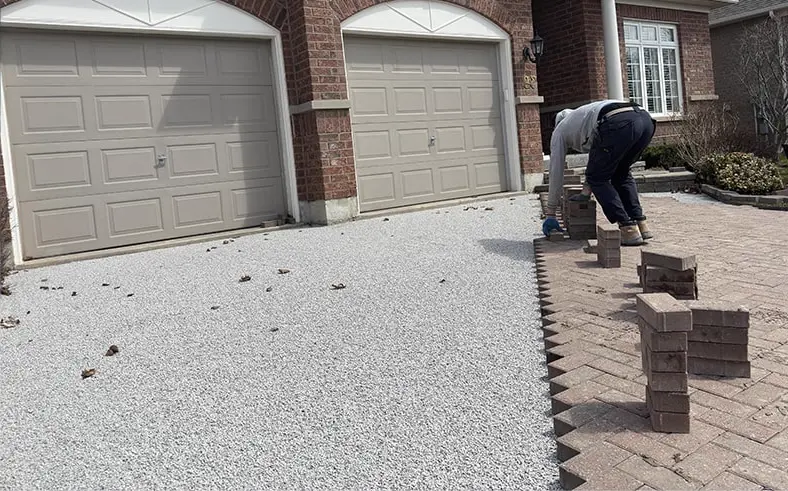
Water Pooling at Garage Entrance: The Fixes That Actually Work
Discover proven solutions for water pooling at your garage entrance. Learn about slope correction, catch basins, drainage systems, costs ($1,500-$5,000), and winter-specific fixes for Ottawa homes.
Water pooling at your garage entrance isn’t just an eyesore—it’s a structural hazard that accelerates foundation damage, creates dangerous ice patches in winter, and slowly destroys your vehicle’s undercarriage. In Ottawa’s freeze-thaw climate, what starts as a puddle in April becomes a skating rink by November and a drainage nightmare by spring. Here’s what actually works to fix it.
Why Garage Entrances Become Water Collection Points
Garages sit lower than most of your property by design—they’re built to accommodate vehicles at a slight decline. This creates a natural basin where water flows downward and has nowhere to go. Three factors make garage entrances particularly vulnerable:
- Negative grading: The slope directs water toward the garage instead of away from it
- Compacted soil settlement: Over 5-10 years, the ground beneath interlocking pavers settles unevenly, creating low spots
- Poor drainage infrastructure: No catch basins, weeping tile, or drainage channels to redirect runoff
In Ottawa, spring snowmelt compounds the issue. A single January thaw can dump 200+ litres of water per square metre onto your driveway—and if your garage entrance is the lowest point, that’s where it all ends up.
The Real Problems Caused by Standing Water
1. Foundation and Structural Damage
Water pooling against your garage door eventually seeps under the foundation slab. Over multiple freeze-thaw cycles, this causes:
- Concrete slab heaving and cracking
- Foundation wall moisture penetration
- Interior floor damage (especially if you have a basement-level garage)
- Wood rot on door frames and trim
2. Vehicle Corrosion
Driving through standing water—especially salt-laden winter runoff—accelerates rust on your vehicle’s undercarriage, brake lines, and rocker panels. This is particularly damaging for Ottawa vehicles already exposed to road salt 5+ months per year.
3. Winter Ice Hazards
From November to March, that puddle becomes a sheet of black ice. We see slip-and-fall injuries every winter from homeowners stepping out of their cars onto invisible ice at garage entrances. It’s a liability issue if you have guests or service providers visiting.
Temporary Fixes vs Permanent Solutions
Temporary Bandaids (Don’t Waste Your Money)
- Sandbags or absorbent mats: They saturate in minutes and do nothing for drainage
- Water pump after every rain: You’ll be pumping weekly—this isn’t sustainable
- Surface sealer: Sealing pavers doesn’t fix the underlying grade or drainage problem
These approaches treat symptoms, not causes. You need to change where the water goes.
Permanent Fixes That Actually Work
Professional drainage correction involves one or more of these proven methods:
Solution 1: Slope Correction and Re-Grading
What it is: Removing and re-laying interlocking pavers with a corrected base slope that directs water away from the garage.
How it works: We excavate the affected area (typically 3-5 metres from the garage door), re-grade the compacted aggregate base to create a 2% slope away from the structure, then re-install pavers with proper edge restraint and joint sand.
Best for: Driveways where the pooling is isolated to the garage entrance zone and there’s enough space to redirect water to lawn or street.
Cost: $1,500 – $2,800 depending on area size (typically 15-30 sq metres).
Timeline: 1-2 days.
Solution 2: Catch Basin and Channel Drain Installation
What it is: Installing a linear drain (channel) or catch basin directly in front of the garage to intercept water before it pools.
How it works: A trench is cut across the garage entrance width, a steel or polymer channel drain is installed, and it’s connected to a drainage pipe that redirects water to a storm sewer, drywell, or permeable area. The drain sits flush with the paver surface.
Best for: Properties where re-grading alone isn’t enough due to steep slopes, large drainage volumes, or limited space to redirect runoff.
Cost: $2,200 – $4,500 (includes drain, excavation, pipe installation, and integration with existing pavers).
Timeline: 2-3 days.
Maintenance: Clean debris from the grate 2-3 times per year (spring, fall, and after heavy storms).
Solution 3: Subsurface Drainage Pipe System
What it is: A perforated drainage pipe (weeping tile) buried beneath the interlock base that captures water and channels it away underground.
How it works: During excavation, we install 4-inch perforated pipe wrapped in geotextile fabric within a gravel bed beneath the paver base. This intercepts water before it reaches the surface and directs it to a discharge point (storm drain, sump pit, or dry well).
Best for: Properties with high water tables, clay soil, or persistent drainage issues across the entire driveway (not just the garage entrance).
Cost: $3,500 – $5,000+ depending on pipe length and discharge requirements.
Timeline: 3-4 days plus connection to municipal drainage or installation of dry well.
Cost Breakdown: What You’re Actually Paying For
Garage entrance drainage fixes range from $1,500 to $5,000+ depending on the solution. Here’s what drives the cost:
| Solution | Cost Range | What’s Included |
|---|---|---|
| Slope correction only | $1,500 – $2,800 | Excavation, base re-grading, paver re-installation, polymeric sand, edge restraint |
| Channel drain + grading | $2,200 – $4,500 | Above + drain unit, trench cutting, pipe connection, grate |
| Subsurface drainage system | $3,500 – $5,000+ | Perforated pipe, gravel bed, geotextile wrap, discharge connection, full base reconstruction |
| Combined system (worst cases) | $5,000 – $8,000 | Re-grading + channel drain + subsurface pipe for properties with severe drainage problems |
Labour vs materials: Expect 60% labour, 40% materials. Excavation, proper base preparation, and precise slope work require experienced crews—this isn’t a DIY job if you want it to last.
Winter Considerations for Ottawa Homeowners
Ottawa’s climate makes garage entrance drainage particularly critical:
- Freeze-thaw cycles: We average 30-40 freeze-thaw events per winter. Each cycle expands pooled water by 9%, pushing pavers apart and cracking concrete.
- Salt accumulation: Standing water mixed with road salt creates a corrosive soup that eats away at vehicle components and concrete surfaces.
- Ice dams: Water that can’t drain freezes into thick ice layers that damage door seals and prevent garage doors from closing properly.
- Best timing for repairs: April-October. Once the ground freezes, excavation becomes difficult and expensive. Book drainage work in spring after the final thaw or in fall before first frost.
How to Choose the Right Fix for Your Property
Not every garage entrance needs a $5,000 drainage system. Here’s how to assess:
Choose slope correction if:
- Water pools only during heavy rain (not every rainfall)
- The affected area is small (under 20 sq metres)
- You have space to redirect water to lawn or street
- The existing paver base is otherwise stable
Choose a channel drain if:
- You have limited space to create proper slope
- Water pools even during light rain
- Your driveway is on a steep grade toward the garage
- You need a guaranteed interception point for runoff
Choose subsurface drainage if:
- You have clay soil or poor natural drainage
- Water appears even days after rain (indicating groundwater issues)
- Multiple areas of your driveway have drainage problems
- Previous surface fixes haven’t worked
Red Flags: When DIY Makes It Worse
We regularly fix botched DIY drainage attempts. Common mistakes that cost more to undo:
- Adding sand to “level” pavers: Sand washes away in weeks, making the problem worse
- Installing a drain without proper slope on the pipe: Water won’t flow, and the drain becomes a mosquito breeding ground
- Not addressing the base layer: Surface fixes fail if the aggregate base beneath is improperly graded
- Directing drainage toward a neighbour’s property: This can violate municipal bylaws and create legal issues
If you’re seeing more than 5cm of standing water, or if pooling persists more than 2 hours after rain stops, this requires professional assessment.
Questions to Ask Before Hiring a Contractor
- Do you perform soil and drainage assessment before quoting? (They should—every property drains differently)
- What’s the warranty on workmanship and drainage performance? (Expect 2-5 years)
- Will you obtain permits if required? (Connecting to municipal storm drains often requires permits)
- How do you ensure the new slope won’t redirect water to my foundation or neighbour’s property?
- Can I see photos of similar drainage projects you’ve completed?
Get a Free Drainage Assessment for Your Garage Entrance
At Interlock Experts, we’ve corrected drainage issues on hundreds of Ottawa driveways. Our process starts with a free on-site assessment where we:
- Measure existing slopes with laser leveling equipment
- Test soil drainage capacity
- Identify the root cause (grading, base settlement, or groundwater)
- Provide 2-3 solution options with transparent pricing
- Show you exactly where the water will be redirected
We also offer interlock repair services for related issues like sunken pavers, joint erosion, and base settling. If your garage entrance drainage problem is part of a larger driveway issue, we’ll identify it during the assessment.
Book your free drainage assessment:
Call +1 613 981 0199 or visit our contact page to schedule. Most assessments are completed within 30 minutes, and you’ll receive a written quote within 24 hours.
Don’t wait until winter ice or foundation damage forces your hand. Fix the drainage now, and protect your property for the long term.